

e wallet indonesia
Consumer TechnologyLiving Asia

E-Wallet Indonesia Growth 2026: Is Cash Still Relevant?

URL copied
Share URL copied

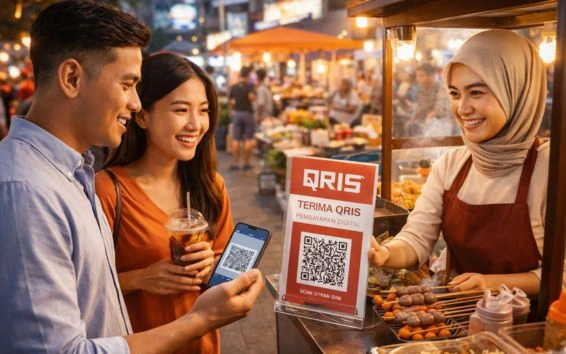
On a typical morning in Jakarta, someone buying coffee is more likely to scan a code than hand over small bills.

The QR sticker is usually taped to the counter. At times it’s laminated. Other times it’s just printed paper. This is what e wallet Indonesia growth looks like in real life. Not a headline nor a launch event.

Just a habit. The shift didn’t happen loudly. It settled in. And now the question is no longer whether digital payments are growing. It’s whether cash still matters.

Digital Is Becoming Routine

A few years ago, digital payments felt promotional. Cashback offers. Flash discounts. Free delivery if you paid through an app.

Today, it feels automatic.

Street vendors accept QRIS. Parking attendants show printed codes. Small shops that once handled only cash now expect scans.

Part of this change came from infrastructure. QRIS simplified things. One code works across platforms. Merchants don’t need five different stickers. Customers don’t need to ask which app is accepted.

But infrastructure alone doesn’t change behavior. Convenience does. No coins to count. We don’t need to wait for change. No more worries about carrying enough small bills.

For many urban residents, digital payments Indonesia services simply became easier.

Small Businesses Quietly Led the Shift

Large malls were early adopters. That was predictable.

The more interesting story is at the neighborhood level. Warungs. Market stalls. Small food carts. They started displaying QR codes too.

For these businesses, accepting digital payments reduces cash handling. It also leaves a record. That record matters more than it sounds. A transaction history can help when applying for micro-loans. It gives informal businesses a traceable financial profile.

So e wallet Indonesia growth is not only about urban convenience. It is also about gradual integration into the formal financial system.

Is Indonesia Becoming Cashless?

Not exactly. Cash is still everywhere.

Outside major cities, connectivity gaps make digital transactions less reliable. In certain rural areas, physical currency remains simpler. Among older generations, trust in cash runs deep.

Even in cities, cash hasn’t vanished. It appears in very small transactions. It shows up when networks fail. In informal exchanges, digital tools can feel unnecessary. 

Indonesia isn’t flipping from one system to another. It’s layering them.

Digital payments are rising in cities. Cash continues in parallel. Most households move between both without thinking much about it.

That is what transition looks like.

Behavior Is Changing — Gradually

Payment tools shape spending patterns.

With e wallet Indonesia platforms, users can track purchases instantly. Bills can be split without exchanging cash. Transfers happen in seconds.

Some apps bundle payment with savings features. Others integrate insurance or micro-investments. Credit lines are built directly into wallets.

These additions don’t feel dramatic. But they alter how money circulates in urban life. When transactions move faster, spending decisions adjust too.

Digital payments become more than tools. They become infrastructure.

digital payments Indonesia

Regulation and Stability Matter

Bank Indonesia has played a steady role in overseeing digital payments.

Licensing rules and interoperability standards aim to keep the system stable. QRIS reduced fragmentation. Supervision builds confidence.

So far, the balance has supported expansion without major disruption. Trust, more than technology, sustains digital adoption.

The Broader Impact

Faster transactions mean less time managing physical cash. Merchants reduce counting errors. Consumers avoid carrying large amounts of money. Businesses gain clearer records.

For small enterprises, this clarity can support access to financing. At the broader economic level, it improves transaction efficiency.

None of this feels revolutionary in daily life. But over time, these small efficiencies accumulate. That is how systems shift.

What Happens Next?

Cash will not disappear in 2026. There is no sudden cutoff point. But in urban Indonesia, digital payments are increasingly the default option.

As more people have smartphones and connection in semi-urban areas becomes better, more people may start using them.

Cross-border QR links within ASEAN might potentially make travel and commerce easier.

Still, the change will likely remain gradual. Indonesia is not racing toward a fully cashless society. It is settling into something more balanced — less cash, more digital.

Conclusion

E wallet Indonesia growth reflects a broader change in how urban economies function. The shift has been steady rather than dramatic.

Cash remains present. It still serves communities where digital systems are less practical.

But in cities, paying through a phone no longer feels new. It feels normal. And when something becomes normal, it tends to stay.

FAQ

Is Indonesia fully cashless now?

Not really. In Jakarta and other big cities, digital payments are common. But cash is still widely used in smaller towns and informal settings.

Because it simplified everything. One QR code works across different e-wallet apps, so merchants no longer need multiple systems.

Bank Indonesia oversees most main platforms. Users still need to be careful about scammers and keep their login information safe.

Share URL copied
Related Articles

IKEA Home Decor Malaysia Launches Fun GREJSIMOJS Collection

People often design their homes to be comfortable and useful. But sometimes...

Shopee Starts Raya Promotion Malaysia Payung Lagi

During Ramadan and Raya, families get together, eat together, and reconnect with...

MindNexis Mental Health Hub Opens New Wellness Space

Living in the city can be hard. Mental health is often put...

Bangkok Food Innovation Elevates Thai Cuisine

Chefs in Bangkok are mixing old Thai recipes with innovative cooking methods,...