

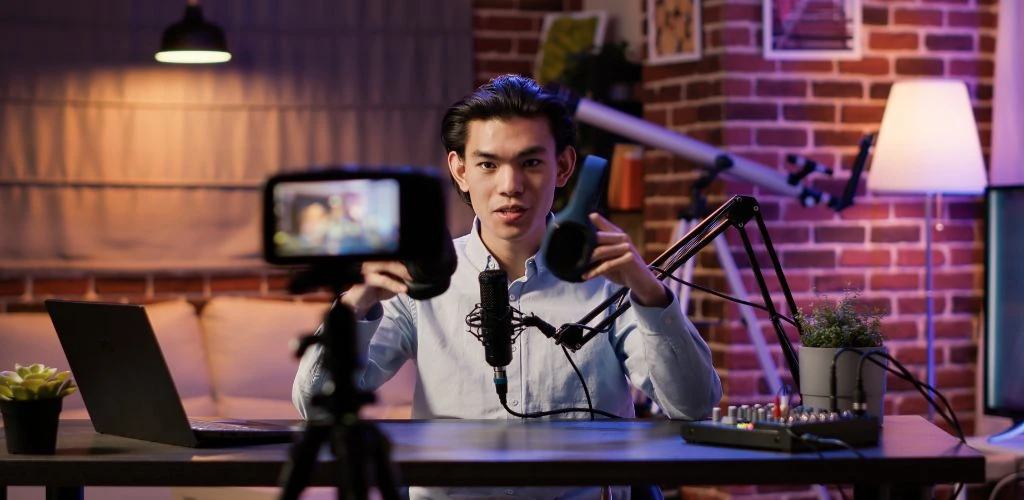
Somewhere between a teenager in Medan reviewing street food on TikTok and a fashion influencer in Jakarta closing a six-figure brand deal, a quiet shift is taking place in Indonesia’s economy.
It rarely appears in GDP tables. Financial headlines seldom mention it. Yet the signals are everywhere for those paying attention.
The creator economy Indonesia is generating real income for thousands of people and quietly reshaping the country’s digital economy. What once looked like casual online activity is steadily turning into a legitimate business sector.
Indonesia is not just consuming global content. Increasingly, it is producing it. With one of the world’s most active social media populations and a young digital generation comfortable with online platforms, the conditions for a creator economy have emerged naturally.
Indonesia is one of the few countries that is both big and active online.
More than 200 million people in Indonesia use social media every day, making the country one of the world’s biggest digital groups. Still, the median age is still less than 30, which means that a lot of people grew up with computers and social networks.
This combination matters.
A large audience means content spreads quickly. Young users are also more willing to experiment with digital careers, including content creation.
For many Indonesians today, the idea of earning income online no longer feels unusual.
Across YouTube, TikTok, Instagram, and emerging platforms, Indonesia hosts a wide network of digital creators Indonesia has produced over the past decade.
Some operate as micro-creators with tightly focused audiences. Others have built subscriber bases large enough to rival the populations of mid-sized cities.
The topics are just as varied:
Each niche supports its own creator communities.
What transforms these communities into an economic sector is the growing list of monetization options. Indonesian creators today earn income through brand partnerships, advertising revenue, affiliate marketing, livestream gifts, digital product sales, and merchandise.
Only a few years ago, many of these options barely existed.
The social media economy in Indonesia extends far beyond the stereotype of lifestyle influencers.
In reality, the creator ecosystem resembles a layered structure where different levels of creators generate value in different ways.
At the highest level sit Indonesia’s largest online personalities.
Some YouTubers attract tens of millions of subscribers. TikTok videos regularly generate hundreds of millions of views.
A smartphone is insufficient for running an operation of this magnitude.
Many great creators hire editors, producers, and social media strategists. Brand partnerships are handled by agencies, and sponsorship campaigns often resemble professional advertising efforts.
Content creation at this level is not a side activity. It is a full-fledged business.
The most commercially active part of the creator economy often sits in the middle tier.
Creators in this tier frequently maintain highly engaged audiences around specific interests. Brands increasingly value this kind of engagement.
A parenting creator with a dedicated audience may deliver stronger marketing results than a generic lifestyle account with a larger but less focused following. Because of this shift, the creator economy now supports a wider group of participants than the early influencer era suggested.
The platforms themselves have done much of the work in lowering the entry point.
YouTube and TikTok now offer revenue-sharing programs that scale with viewership rather than requiring creators to hit an arbitrary threshold before seeing any return. Podcast platforms have followed a similar logic, building monetization models that reward consistent, loyal audiences over raw download numbers.
The practical effect is that the income timeline has compressed — creators no longer need to spend years building a massive following before the economics start making sense.
For a growing number of Indonesians, that shift has turned content creation into a credible side income, and for some, the foundation of something larger.
The creator economy Indonesia is not tied to a single platform.
Instead, creators operate across several channels, adapting their content depending on the platform’s strengths. Together, these platforms are shaping a rapidly expanding social media economy in Indonesia.
TikTok didn’t just grow Indonesia’s creator ecosystem — it rewired it.
The platform’s algorithm treats every video as a fresh bet, regardless of who posted it. Follower counts that took years to build on other platforms can suddenly become irrelevant when one video is all it takes to reach an audience of millions.
The addition of TikTok Shop has also changed how creators monetize their content.
Products can now be promoted and sold directly within videos or livestream sessions. The approach fits Indonesia’s social and trust-based shopping culture particularly well.
YouTube continues to dominate long-form content.
Educational channels, gaming commentary, and deep-dive discussions thrive on the platform because longer videos allow creators to build stronger relationships with viewers.
That deeper connection often translates into more stable monetization through advertising revenue and memberships. For many Indonesian creators, YouTube remains the foundation of their content strategy.
Instagram isn’t going anywhere — at least not in the verticals where image is everything.
Fashion, beauty, travel, and food creators have built their brand relationships on the platform, and despite the noise around TikTok’s rise, most serious partnership conversations in these spaces still begin with an Instagram media kit.
Posting everywhere is now table stakes, but when a brand sits down to negotiate a campaign, Instagram’s numbers tend to be the ones that close the deal.
Calling the creator economy Indonesia as a real economic driver isn’t just a hype. The structural foundations that would make that label stick are already in place.
The creative ecosystem produces employment well beyond the creators themselves. Editors, videographers, stylists, marketing managers, and talent agencies all form part of the broader industry.
Importantly, these jobs are distributed across the country rather than concentrated in a single industrial hub. A creator in a small city can build a team just as easily as someone in Jakarta.
Online marketplaces provide income for a large number of Indonesian creators.
Ad revenue from YouTube and TikTok doesn’t originate in Indonesia — it comes from global advertising pools, which means every rupiah a creator earns from those platforms is effectively foreign income entering the domestic economy.
Sell a course to someone in Canada or a design template to a buyer in Tokyo, and the same principle applies. The channel is digital, but the economic function is identical to exporting physical goods.
Perhaps the most significant consequence of the creative economy is how it reshapes entrepreneurship.
A creator who cultivates a following around a particular talent or passion may ultimately establish goods, services, or enterprises. The method inherently teaches practical skills such as marketing, branding, audience building, and financial management.
These powers go much beyond content production.
The creator economy Indonesia is still evolving.
Tax regulations surrounding creator income continue to develop. Platform monetization rules can change quickly, and income volatility remains a challenge for creators who depend heavily on algorithms.
Even so, the direction is becoming clearer.
More Indonesians are pursuing content creation professionally. Platforms compete to attract creator participation, while brands allocate increasing budgets to the social media economy.
Supporting infrastructure — payment services, education programs, and creator management agencies — is gradually catching up with the scale of the industry.
Indonesia has long had the audience. Now it is beginning to build the economy around it.
It usually starts with brand partnerships. But that is only one piece of the puzzle. Many creators also earn from YouTube ads, affiliate links, livestream selling, or digital products they build around their audience.
Big cities may assist, but they are not necessary. Many producers from smaller towns acquire popularity online, particularly when their video depicts local culture, gastronomy, or daily living outside of Jakarta.
Income is rarely stable. One month can bring several brand deals, the next might be quiet. Platform algorithm changes and copied content are also common frustrations for many creators.
During the Gaikindo Jakarta Auto Week, Changan formally unveiled the Lumin electric...
The technological shift wave is transforming the provinces surrounding Hanoi and Ho...
In the burgeoning digital world of Vietnam this March 2026, having a...
The Hyperboost Edge is a new running shoe from adidas that is...