
latest investment trends in Asia
FDI & TradeGrowth & Capital

High-Speed Green: Latest Investment Trends in Asia 2026

URL copied
Share URL copied

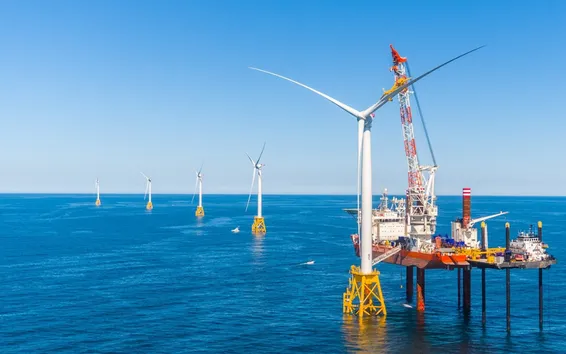
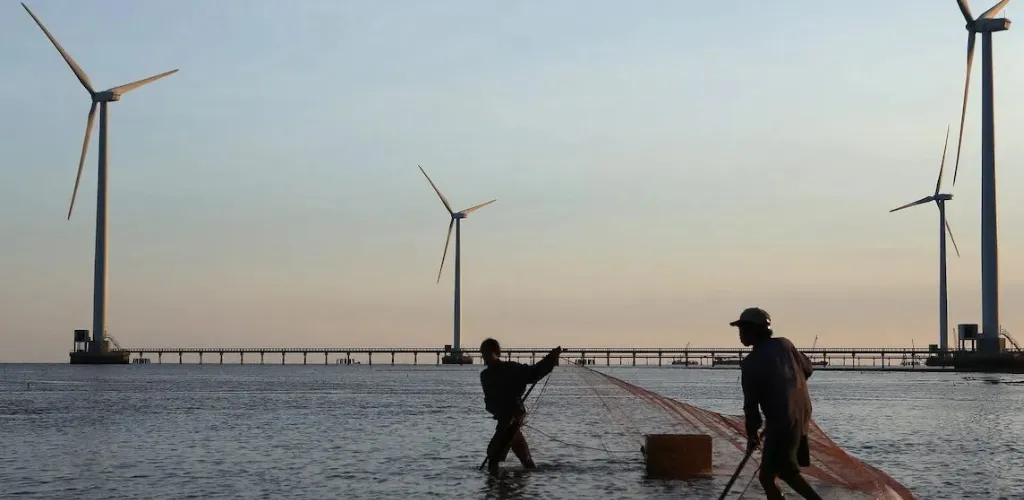
The latest investment trends in Asia have officially shifted their focus to the enormous offshore wind and green hydrogen possibilities of Vietnam’s southern coast. As of mid-March 2026, the energy landscape is no longer about fulfilling demand but about securing a “Green Supply Chain” for global tech giants. The big players are now investing billions of dollars in offshore wind projects in Ca Mau and Gia Lai. Therefore, Vietnam is now becoming the new hub for renewable energy in Southeast Asia. This is an extremely important growth driver for Asian economies, proving that sustainability is now the new capital.

The $1.86 Billion Windfall in the Central Highlands

What does a “Mega-Project” look like in 2026? Look no further than the Hon Trau Wind Power Phase 1 in Gia Lai. The investment in this wind farm is over $1.86 billion and spans almost 50 hectares of land and sea. Furthermore, VinGroup’s VinEnergo has announced a massive 3,000MW offshore wind farm in Ca Mau. This wind farm is specifically for the export of electricity. Vietnam is no longer an energy import-dependent country but rather a green energy exporter. This is a result of the shift in Emerging markets Asia investments towards “hard” infrastructure that supports a Net-Zero world. Furthermore, the new pricing structures (Decision 1508) have increased the cap prices for wind power.

Powering the Semiconductor Surge

What is the significance of energy security today? The answer to that question is encapsulated in the following paragraphs:

  • Data Center Expansion: The establishment of AI data centers located in Da Nang needs 7×24 stable and green power to meet the ESG requirements of investors.
  • Chip Fabrication: The newly announced semiconductor plants located in Hanoi cannot tolerate even a microsecond of power fluctuation.
  • EV Battery Plants: The establishment of the new EV battery plant by LGES located in Phu Tho needs a modernized green grid.

The above industries are the target customers for the new wind and solar farms. Hence, the symbiotic relationship between Clean Power and Clean Tech is driving Vietnam’s market expansion into the global electronics supply chain. Therefore, Vietnam is no longer competing based on cost but on the reliability and ‘green-ness’ of the industrial base.

Asian economic growth

The Infrastructure Super-Cycle

What does this mean in terms of the continent’s development? This marks the beginning of the “Infrastructure Super-Cycle.” In fact, the government has planned almost $340 billion worth of public expenditure for the 2026-2030 period.

Furthermore, this is being driven by a “Dual-Engine” model that combines both public expenditure and FDI. This includes the North-South High-Speed Railway and the Long Thanh Airport. Moreover, the decline in the cost of utility-scale battery storage (currently at $80/kWh) means that the country is now becoming one of the most advanced in the Emerging markets Asia universe in terms of grid stability. This means that a higher caliber of institutional investor is seeking 20-year returns rather than a short-term exit.

A Future Built on Resilience

The story of 2026 is one of a nation building for the next fifty years. Vietnam is showing that growth can happen while remaining green.

In conclusion, the age of “fossil fuel-led industrialization” is no more. Instead, a new and sophisticated model fueled by wind energy and technology integration has taken its place. Vietnam, by embracing the gale, is not only producing energy but a new era for itself. It will therefore continue to lead the region in its green revolution.

Ready to stay ahead of the energy and infrastructure innovation shaping Asia? RiseAsia is your one-stop shop for green energy and capital market insights.

FAQs

What is the significance of VinEnergo's 3,000MW proposal in Ca Mau?

It represents a shift toward “Energy Export,” where Vietnam utilizes its vast coastline to provide green power to the broader ASEAN region, boosting its trade balance.

It raised the ceiling price for wind power by 9–23%, providing the necessary financial momentum for developers to resume stalled projects and attract new FDI.

As renewable penetration (wind/solar) increases, storage is essential for grid stability, especially to support power-hungry sectors like AI data centers and semiconductor manufacturing.

Share URL copied
Related Articles

How Venture Capital Asia is Betting on Vietnam 2026

The Venture Capital Asia market is seeing a spectacular shift as of...

Cross-border Investment Asia: Vietnam’s 2026 M&A Boom

The evolving landscape of Cross-border investment Asia has witnessed a renewed and...

Capital Investment Indonesia and the Digital Economy Growth

Across Southeast Asia, investors are quietly shifting their attention. And increasingly, that...

International Investors in Asia: Vietnam’s 2026 Carbon & Tech Era

The focus of International investors in Asia has officially turned to Vietnam’s...