
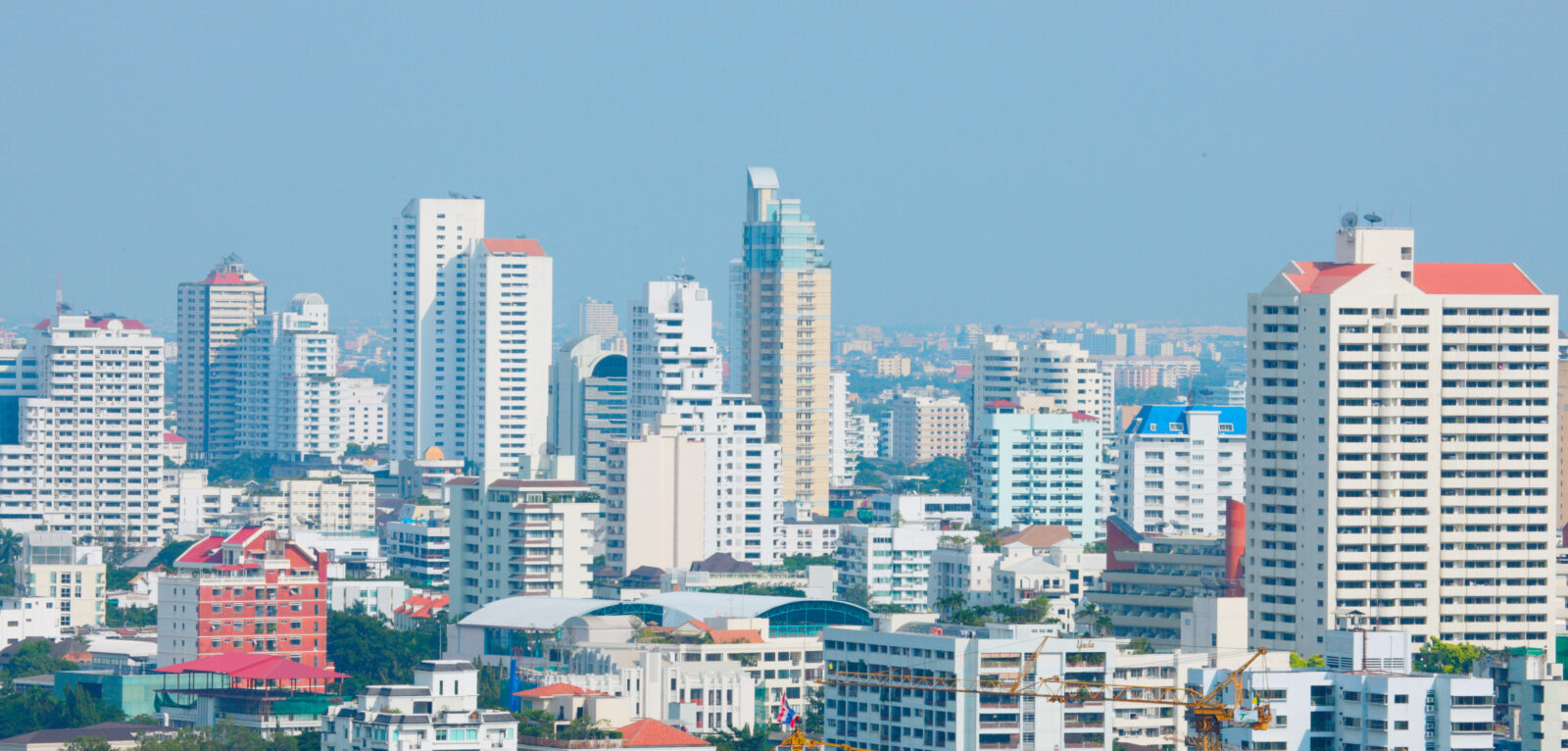

The property market in Bangkok is starting to improve, but only in certain areas. Thailand’s capital is starting to stabilize after years of economic upheaval, worries about too much supply, and weak foreign demand. However, there are still fundamental problems.
Transfers of condominiums are getting better. Foreign buyers are slowly coming back. Districts with infrastructure are doing better than the overall market. At the same time, the fact that there are too many offices and the rise of hybrid work are changing how developers think about how to use space.
The story is no longer about fast growth. It has to do with recalibration.
Condo Absorption: Stabilization After the Oversupply Cycle
From 2018 to 2022, there were a lot of new condo developments in Bangkok that were more than what people wanted. The epidemic made the delay worse, and developers were left with a lot of unsold inventory.
But by the end of 2024, leading property consulting firms including CBRE Thailand and Knight Frank Thailand said that absorption rates were getting better, especially in the prime and mid-to-upper sectors.
Key Indicators
- New condo launches remained below pre-2019 peaks, reflecting developer caution.
- Absorption rates in central Bangkok projects improved to an estimated 60–70% within the first year of launch (market estimates; verify latest quarterly figures).
- Unsold inventory has gradually declined as developers slowed supply.
- Luxury condominiums in core CBD districts have shown stronger take-up than lower mid-market suburban units.
Knight Frank Thailand said that developers are putting “right-sized supply” ahead of ambitious pipeline development. This is a sign that the market is moving toward a healthier balance.
This means that the way the Bangkok condo market works in 2025 is based on demand, not speculation.
Foreign Buyers: Diversification Beyond China
Foreign ownership has always been a big part of Bangkok’s condo market. Thai legislation limits foreign ownership to 49% of the total saleable area of each condominium complex. This means that international demand is very high in only a few buildings.
Before 2020, the most international transfers were from Chinese buyers. In 2024–2025, things started up again, but in a more varied way.
Breakdown of Foreign Buyers
Chinese purchasers are still important, especially in CBD and leisure areas.
More and more people in Myanmar, Taiwan, Russia, and several ASEAN markets are interested. More people want bigger units that are good for long stays and moving families.
Industry analysts note that foreign buyers Thailand property demand is increasingly tied to:
- Country’s long-term visa programs.
- Appeal of healthcare and retirement
- Comparatively cheap compared to Singapore and Hong Kong
- Tourism knowledge turning into investment choices
CBRE Thailand said that excellent CBD condos are still attracting investors from other countries who want reliable rental yields and lifestyle assets.
Foreign demand hasn’t fully recovered to pre-pandemic levels, but its diversity lowers concentration risk and makes the market more stable.
Trends in Prices and the Number of Transactions
Prices for real estate investments in Bangkok are still rising, but not at a crazy rate.
Changes in the Price Index:
- Prices for prime CBD condos are expected to rise by 3% to 5% each year.
- Suburban mass-market segments: mostly flat with some changes here and there.
- Land prices near new mass transit lines: still going up.
- Transaction volumes have been slowly going up, especially in core areas with good connections.
Rental yields in central Bangkok are usually between 3% and 5%, depending on the quality and location of the project. This is competitive with several developed markets in the Asia-Pacific region.
When you compare regions, Bangkok is still cheaper than Singapore and Hong Kong. Moreover, costs to get in are lower than in Tokyo’s best areas.
The expectation for Thailand’s real estate market in 2025 is for stability rather than quick price increases.
Office Oversupply and Mixed-Use Conversion
Bangkok’s office market needs to be structurally recalibrated, even though the residential market is stabilizing.
A lot of Grade A office space has become available on the market in the last few years. But the rise of hybrid work has made the need for huge, traditional office spaces less urgent.
Current Office Market Signals
- Vacancy rates in older buildings remain elevated.
- Premium ESG-certified buildings attract stronger tenant interest.
- Flexible workspace operators are regaining relevance.
- Developers are exploring office-to-mixed-use conversions.
According to property consultants, companies are prioritizing:
- Proximity to BTS/MRT lines
- Lifestyle amenities
- ESG-certified developments
- Smaller but higher-quality spaces
This shift reflects the overall global workplace evolution, not only a local anomaly.
In response, mixed use projects integrating residential, retail, hospitality, and office functions are becoming more prominent in Bangkok’s urban planning strategy.
Infrastructure as a Price Multiplier
Bangkok’s urban development is still focused on expanding public transportation.
The development of BTS and MRT lines, as well as projects related to the Eastern Economic Corridor (EEC), is changing how people choose to live.
those that are close to transport stations frequently cost 10–20% more than those that are not connected to transit.
Emerging growth corridors include:
- Rama 9 (new CBD extension)
- Bang Na (eastern industrial spillover)
- Areas surrounding future MRT Orange Line development
In Bangkok’s property cycles, infrastructure led development is still the long stand feature. It also remains the strongest value driver in the year 2025.
Post-Pandemic Demand Shift
Buyer behavior has evolved significantly since 2020.
Emerging Preferences
- Larger units accommodating hybrid work
- Smart-home features
- Wellness-oriented amenities
- Access to international schools and hospitals
- Mixed-use, walkable environments
Hybrid work has changed the demand for both homes and offices. Many professionals don’t have to commute as much as they used to, but having access to lifestyle amenities and good living space has grown increasingly vital.
Developers are changing the proportions of their units and the ideas behind their projects to move away from ultra-compact speculative flats and toward functional design.
This change in structure shows growth instead of shrinkage.
Risks to Monitor
Despite stabilization, risks remain:
- High household debt levels in Thailand
- Global interest rate volatility
- Geopolitical shifts affecting foreign capital flows
- Potential oversupply in certain suburban zones
Experts in the field say that recovery isn’t going to be smooth. Prime and transit-linked districts do better than areas on the outskirts.
Because of this, the story about the Bangkok property market in 2025 is not the same for everyone.
Why This Matters for Thailand’s Urban Economy
Thailand’s broader economy is deeply connected with real estate.
A stable property sector supports:
- Construction employment
- Banking and mortgage activity
- SME retail and service ecosystems
- Foreign capital inflows
Bangkok is the engine of Thailand’s economy. Its property resilience shows that people in cities are more confident.
The recalibration phase could ultimately make long-term sustainability stronger by cutting down on speculative excess and making sure that supply matches real demand.
Recovery With Discipline
Bangkok’s real estate market isn’t going through a major boom in 2025, but it is getting better little by little.
More and more people are buying condos. The demand from other countries is shifting. Infrastructure keeps pricing stable. Adding mixed use spaces to the office sector is changing everything.
The change from growth based on volume to growth based on strategic urban integration suggests that the cycle is moving forward.
Both investors and policymakers should work toward growth that is balanced. This should support the growth by improving infrastructure, providing more sources of finance, and changing how people live in cities.
Bangkok is getting better, but it is still important to give a high focus on it.
Stay updated with the latests trends and insights in Thailand by exploring more articles on RiseAsia.