

Business Trends in Asia
Industry TrendsWork & Industry

Business Trends in Asia 2026: Vietnam Manufacturing Surge

URL copied
Share URL copied

Business trends in Asia have shown remarkable resilience in the face of global uncertainties. Vietnam has registered a GDP growth of 8.02% in 2025, primarily driven by a 9.97% increase in the processing industry.

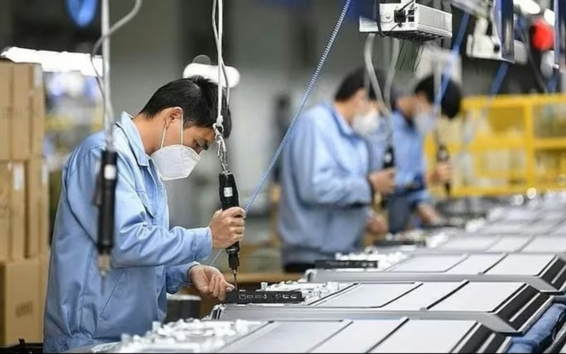
The Vietnam manufacturing growth curve has shown how countries can create a competitive advantage for themselves by making appropriate strategic positioning and reforms in the industry. Vietnam is among the top three most promising manufacturing destinations in Asia, according to the Asia Manufacturing Index 2026.

Manufacturing Drives Economic Momentum

Vietnam has utilized its competitive advantages over the last several decades to become a leading player in the global supply chain. The country’s contribution has become even more important in the “China Plus One” production relocation plan. This is considered one of the most important business trends in Asia.

Vietnam’s pharmaceutical industry has a market size of US$7 billion in 2025. It is expected to grow to US$10 billion in 2026. The development in biotechnology is rapid. Sanofi and VNVC have started construction of a vaccine and biologicals plant with an initial investment of around US$77 million. This plant will meet global GMP requirements.

Export Performance Strengthens

Export performance Vietnam has managed to surpass the expectations of the government in terms of export performance. Despite the fact that Vietnam has a 20% reciprocal tariff rate with the US, the country has continued to gain more market share in the production of products such as phones, textiles, and footwear.

In 2025, the total trade value reached US$930.05 billion, which translates to an impressive 18.2% year-over-year growth. High-value products are at the core of the export and import list, which shows the country’s progress in the value chain.

Regional integration enhances the competitiveness of the country. Vietnam has extensive FTA agreements with other countries, such as the CPTPP, EVFTA, RCEP, and the UKVFTA, which give manufacturers duty-free and reduced tariff access to key global markets.

Foreign Investment Flows Accelerate

The trends in FDI investments indicate a continued sense of confidence in the business environment of Vietnam. In the first nine months of 2025, the country recorded a record-breaking foreign direct investment of $28.54 billion

Foreign direct investment flows have accelerated, indicating a continued improvement in the manufacturing sector of Vietnam and its continued importance as a major hub KPMG. Multinational companies consider Vietnam not only as a cheap destination but also as a production hub.

Foreign direct investment remains an important source of investment, especially in the fields of electronics, technology, green manufacturing, and digital transformation.

Infrastructure Investments Support Growth

In 2025, a record number of 564 projects worth VND 5.14 trillion (US$195.7 million), including almost 3,200 km of expressways, the start of Long Thanh Airport, and the expansion of Noi Bai and Tan Son Nhat airports.

These are essential industrial development Asia enablers. Long Thanh Airport, scheduled to open in 2026, will greatly improve the transport and export capabilities of Southern Vietnam with its air logistics center and bonded zones.

The expansion of port capacity at Lach Huyen and Cai Mep-Thi Vai. Energy projects such as the Thai Binh 2 Thermal Power Plant and the LNG projects will ensure a sufficient supply of electricity.

Vietnam's Manufacturing Boom

Policy Reforms Drive Competitiveness

The 10th session of the 15th National Assembly ratified a record 51 laws and 39 resolutions, including reforms to tax administration, investment law, and personal income tax. These are legislative accomplishments that provide a conducive environment for businesses.

The Vietnamese government has taken proactive measures both at national and provincial levels. These include providing generous incentives for high-tech businesses in terms of corporate income tax and establishing industrial zones specializing in certain industries.

Simplification of the administrative environment helps to curb bureaucracy. Vietnam has simplified its administrative system through the adoption of a two-tier system of government from July 1, 2025. The system will comprise a province-commune level of government.

E-Commerce and Digital Economy Expansion

Vietnam is on course to meet its target of $26-28 billion in 2025 for its e-commerce industry, with its position as a regional export hub for e-commerce helping to boost its long-term prospects.

Categories such as furniture, apparel, home and kitchen, and personal care products are growing at rates significantly above the global average, driven in part by the capabilities in Vietnamese manufacturing and the increasing sophistication of brand capabilities in the region.

Support for cross-border e-commerce is included in the National Master Plan for the development of e-commerce in Vietnam for the period 2026-2030, with a series of initiatives improving the policy and capabilities environments.

Domestic Consumption Grows

Personal consumption increased by 8% owing to a large consumer base. Investment growth also accelerated to nearly 9%. Increasing income levels are also providing support for growth in domestic consumption beyond exports.

Tourism also recovered significantly. Tourism receipts were 120% of 2019 levels and reached $40 billion in revenue or 7% of GDP.

GDP per capita now stands at US$5,026, which is 1.4 times that of 2020 and has propelled Vietnam into upper-middle-income status. increasing income levels are providing support for growth in domestic consumption beyond exports.

Stock Market Attracts Attention

Vietnam’s stock market has recorded an outstanding 57.7% price return in Vietnamese dong terms as of September 30, 2025. Such outstanding performance has caught the attention of regional and global stock markets.

Vietnam has been reclassified from a Frontier to a Secondary Emerging Market by FTSE Russell, which has an effective date of September 21, 2026, according to Statista. Such a classification is a landmark event for Vietnam.

Vietnam has eliminated the pre-funding requirement for trades and has moved to a non-prefunding model and has also established a process for handling failed trades. Such reforms are helpful for international investors.

However, the outlook is still optimistic. The growth forecast for 2026 is still strong. HSBC predicted that Vietnam’s GDP growth for 2026 will be 6.7%, driven by faster public investment and export resilience. AMRO also predicted that Vietnam’s GDP growth for 2026 would be 7.6%, the highest among ASEAN countries.

EuroCham said that its Business Confidence Index in Q4 2025 reached 80 points, the highest in seven years, with 88% of European companies confident about Vietnam’s economic outlook for 2026-2030.

The combination of manufacturing prowess, infrastructure improvement, policy improvement, and domestic consumption makes Vietnam an attractive location in the larger story of business trends in Asia. A successful 2026 will lay the groundwork for future growth.

Find more information about business trends in Southeast Asia, especially Vietnam. Visit RiseAsia Vietnam for information on trends that are shaping the region.

FAQs

What are the key business trends driving growth in Asia?

The relocation of manufacturing through the “China Plus One” approach fuels substantial investment movements, especially in Vietnam, Thailand, and Indonesia. The digital transformation trend speeds up in various industries with the adoption of e-commerce, fintech, and logistics technology. Infrastructure development, such as airport, seaport, and expressway projects, enhances connectivity. Free trade agreements open markets, and supply chain diversification mitigates risks of concentration. Middle-class consumption patterns fuel domestic market growth. Green manufacturing and sustainability projects address global environmental norms.

Vietnam has favorable labor costs and improving labor quality and industrial capabilities. It also has a favorable location with access to key Asian markets with 17 FTAs, including CPTPP, EVFTA, and RCEP. The country has a favorable business environment with active and forward-thinking government policies, tax breaks for corporations, and optimized business regulations. The country has invested heavily in infrastructure, improving its logistics capabilities. It has a stable business environment with a stable political environment and consistent economic reforms. It has a favorable ecosystem with its role in the global electronics and textile industries.

Several factors are involved in ensuring the sustainability of growth. FDI and export performance offer short-term support, as the world demand for electronics and manufactured products is strong. Completing infrastructure projects such as Long Thanh Airport is an improvement in the long-term competitiveness of the economy. However, there are challenges such as risks of credit expansion, power supply, and the weakness of the domestic private sector. Most external forecasts see a growth rate of 6.5-7.6% for 2026, which is strong but short of the government’s target of 10%.

Share URL copied
Related Articles

Thailand Approves New Green Industry Tax Incentives

Thailand’s green industry incentives are a big step toward bringing back the...

Liberty General Insurance Malaysia Expands EV Protection

Electric vehicles are becoming more common on Malaysian roads. With more charging...

Fintech Asia Growth: Vietnam Market Reaches $4.33 Billion

The fintech Asia environment is very dynamic, and Vietnam is one of...

Indonesia Warehouse Automation Growth in 2026

Step inside a large fulfillment center in West Java and you’ll notice...