

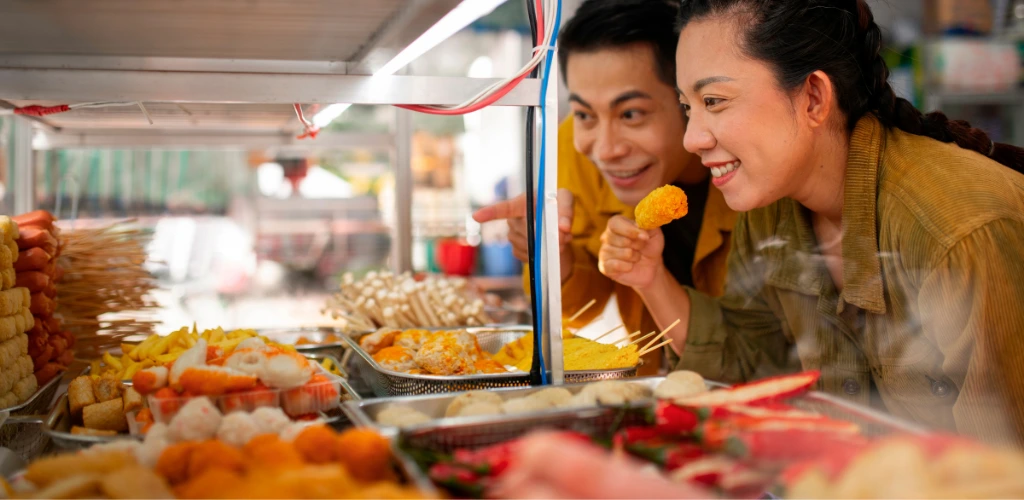
Food & Beverage Asia Trends
Industry TrendsWork & Industry

Food & Beverage Asia Trends Shaping Malaysia’s Market

URL copied
Share URL copied

The Food & Beverage Asia trends are moving into a new phase, and Malaysia is at the heart of it all. Local demand no longer shapes the industry. Regional trade flows, global halal standards, pressure to be more environmentally friendly, and fast-moving digital platforms are all having an effect on it now.

Malaysia’s food processing sector contributes more than 10 percent to the country’s manufacturing output, according to official trade data. The overall Malaysia F&B market is estimated to exceed RM 90 billion annually, supported by steady household spending and strong exports.

At the same time, ASEAN’s combined food and beverage market continues to expand alongside a growing middle-class population of over 650 million people across the region.

The question is no longer whether the sector will grow. The real question is how businesses adapt to these shifts.

Consumers Are Driving Smarter Demand

Malaysia consumer food trends show a clear shift toward quality and transparency. Buyers are paying closer attention to ingredients, nutrition labels, and sourcing practices.

A regional survey by global research firms has shown that more than half of Southeast Asian consumers are willing to pay more for healthier food options. In Malaysia, this is visible in the growth of low sugar beverages, plant-based alternatives, and functional drinks that promote gut health and immunity.

It’s also important to be exposed to digital media. People shop differently after reading reviews of food influencers on social media. A lot of people now look at different stores online before going to the physical store.

Analysts in the food industry say that trust is the new currency for branding. Companies that communicate clearly about sourcing and safety are gaining stronger loyalty.

This change is pushing Malaysian producers to upgrade packaging, certification standards, and digital marketing strategies.

Halal Expansion Is Strengthening Global Positioning

The halal industry Malaysia remains one of the country’s strongest export pillars. Malaysia is widely recognised for its strict halal certification system, which is accepted in many global markets.

The State of the Global Islamic Economy Report says that spending on halal food around the world has gone over USD 1.4 trillion in the past few years and is likely to keep going up. In the future, Malaysia wants to be a bigger halal centre in Asia.

As of right now, some of the most significant destinations for the export of processed goods include the Middle East, China, Japan, and ASEAN.

Halal certification is no longer only seen as a means of adhering to religious regulations. More and more people see it as a sign of cleanliness and quality control. This makes it more appealing to people who aren’t Muslim.

Trade experts say that small and medium-sized businesses (SMEs) that get halal certification often have an easier time breaking into new markets. It makes people trust you more and makes them less likely to hesitate to buy.

As cross border food trade ASEAN continues to expand, halal branding gives Malaysia a competitive edge.

Sustainability Is Becoming a Market Requirement

Malaysia F&B market

Asia’s sustainable food trends are transforming business practices throughout the continent.

People are more conscious of the amount of food they discard, the carbon footprint they leave behind, and the environmental impact of packaging. In Malaysia, large supermarkets are beginning to reduce their usage of single-use plastics, while food manufacturers are investigating the use of recyclable materials.

Recent regional studies suggest that nearly half of ASEAN consumers prefer brands that demonstrate environmental responsibility.

Businesses are responding by:

  • Reducing packaging waste
  • Improving sourcing transparency
  • Investing in energy efficient production
  • Strengthening food waste management

Sustainable transformation can raise costs in the short term, but it will make the brand stronger in the long run. Export markets are also making environmental rules stricter, which means that sustainability is now a trade issue.

Malaysia’s palm oil certification experience shows how sustainability standards can determine access to global markets. Similar expectations are emerging across processed food segments.

Digital Platforms Are Expanding Reach

Digital platforms have changed the Malaysia F&B market.

More and more people are using apps to order groceries and food. E-commerce platforms allow small and medium-sized enterprises to sell directly to consumers without having to invest heavily in physical locations.

Digital orders went through the roof during the pandemic. Many people still bought things online even after stores reopened. Reviews and ratings on the internet now affect how visible a brand is.

Industry insiders estimate that digital channels now contribute a significant share of revenue for many small and mid-sized food brands.

Digital adoption makes it easier to get into a market, but it also makes it more competitive. Businesses need to keep their customers interested and their products high quality.

Cross-border e-commerce platforms also make it easier for exporters to get into regional markets.

ASEAN Trade Is Deepening Integration

ASEAN is still one of Malaysia’s biggest trading areas. Trade deals have made logistics easier and lowered tariffs.

The Malaysia External Trade Development Corporation says that food exports to ASEAN countries are still a large part of the total processed food exports.

Singapore remains a major partner, while Indonesia and Thailand offer scale due to population size. Vietnam is also emerging as a dynamic market.

More and more, supply chains are working together. Ingredients come from other countries, are processed in Malaysia, and are sent all over the region.

Experts say that Malaysia’s long-term competitiveness will depend on how much money it puts into cold chain logistics, port efficiency, and food safety systems.

Expert Insight on the Road Ahead

Malaysia F&B market

People who watch the industry say it is entering a stage of maturity. Growth is still happening, but it’s more important than ever to stand out.

Companies that focus on premium positioning, strong branding, and being ready to export are likely to do better.

Rather than competing only on price, businesses are moving up the value chain with ready to eat meals, specialty snacks, and halal certified ingredients for global markets.

The transformation is gradual but steady.

Why This Matters for Malaysia’s Economy

Food and beverage trends in Asia are changing more than just what people buy. They are making Malaysia’s economy stronger.

The sector helps with making things, shipping things, selling things, and making money from exports. It helps small and medium-sized businesses and brings in customers from other countries.

Malaysia can become a stronger food hub in the region if it keeps investing in sustainability, halal leadership, and digital trade systems.

Things are changing in the industry. And that change shows that the economy is getting better as a whole.

FAQs

1. What is driving growth in Malaysia’s F&B sector?

Growth is supported by strong domestic demand, halal export expansion, digital sales channels, and rising regional trade within ASEAN.

Halal certification builds trust and opens access to global markets, including both Muslim majority and non Muslim countries.

Sustainability is influencing packaging, sourcing, and export standards. Companies that adapt early gain stronger brand loyalty and trade access.

Yes. ASEAN countries are among Malaysia’s largest food export destinations due to trade agreements and geographic proximity.

Want More Industry Insights?

Malaysia’s F&B transformation is just one part of a larger story about regional growth.

If you want deeper analysis on SME expansion, digital economy shifts, and cross border trade trends, explore more industry coverage on RiseAsia. Discover how Malaysia and ASEAN markets are adapting to new consumer demands and global competition.

Stay informed. Stay ahead. Follow RiseAsia for trusted insights on Asia’s economic growth journey.

Share URL copied
Written by
Munirah

On my way to turning my dreams into reality

Related Articles

Thailand Approves New Green Industry Tax Incentives

Thailand’s green industry incentives are a big step toward bringing back the...

Liberty General Insurance Malaysia Expands EV Protection

Electric vehicles are becoming more common on Malaysian roads. With more charging...

Fintech Asia Growth: Vietnam Market Reaches $4.33 Billion

The fintech Asia environment is very dynamic, and Vietnam is one of...

Indonesia Warehouse Automation Growth in 2026

Step inside a large fulfillment center in West Java and you’ll notice...