

business opportunities in Asia
SME & EnterpriseWork & Industry

How Indonesia’s SMEs Unlock Business Opportunities in Asia

URL copied
Share URL copied

For decades, Indonesia’s small and medium-sized enterprises were described in familiar terms — resilient, community-based, the backbone of the domestic economy. That description still holds. Their reach has altered.

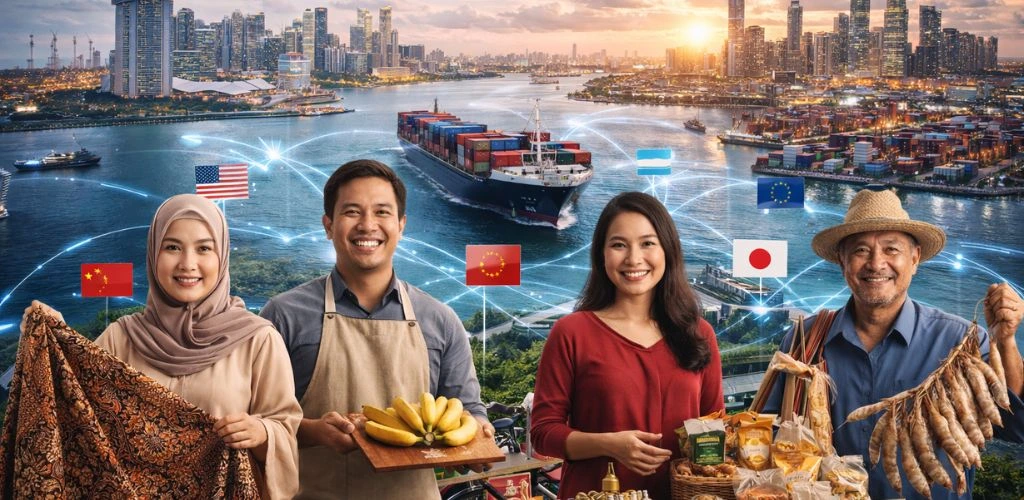
Indonesian small and medium-sized businesses (SMEs) are gradually finding their place in bigger business opportunities in Asia. They are expanding beyond local markets and into regional supply chains, internet commerce platforms, and export corridors.

This change didn’t happen all at once. It shows years of improvements to infrastructure, more people getting access to the internet, more ways to make money, and more economic integration within ASEAN. When you look at them all together, these changes are slowly changing the geography of Indonesia’s business power and opening new trade opportunities across the region.

A Different Kind of Growth Story

The size of Indonesia alone makes its tale about SMEs important. With more than 275 million people and a rapidly expanding middle class, the country provides a deep base for entrepreneurial activity. Millions of small firms operate across food processing, manufacturing, retail, agriculture, services, and the creative economy. These sectors increasingly support regional SME growth.

But scale can be deceptive. For years, many of these enterprises operated informally or remained tied to local demand. The real shift now is not just growth in numbers — it is growing outward confidence.

Increasingly, business owners are asking not only how to compete within Indonesia, but how to access neighboring markets. That subtle mindset change is where new business opportunities in Asia begin to emerge.

Digital Access Has Lowered Old Barriers

One of the clearest catalysts has been digital adoption.

Ten years ago, exporting required layers of intermediaries. Today, an SME in Bandung can test overseas demand through an online marketplace before ever speaking to a distributor. Payment gateways handle cross-border transactions. Logistics providers offer trackable regional shipping, creating more practical trade opportunities for smaller firms.

It does not eliminate complexity. Regulations still exist. Standards still matter. But the entry barrier is undeniably lower.

Digital transformation SMEs are undergoing is less about technology for its own sake and more about visibility. Regional buyers can now discover Indonesian products directly — whether specialty foods, furniture, or niche fashion brands.

Visibility creates access. Access creates opportunity that ultimately fuels broader SME growth.

Manufacturing and Agribusiness Find Regional Demand

Some sectors are particularly well placed within emerging business opportunities in Asia.

Indonesia’s agribusiness network remains vast and diverse. Processed foods, spices, fisheries products, and halal-certified goods continue to see demand across Southeast Asia and parts of East Asia. Rising consumer incomes across the region support this continued SME growth.

Manufacturing tells a similar story. Furniture producers in Central Java and industrial suppliers in East Java are increasingly integrated into ASEAN production chains. Rather than exporting finished goods alone, many SMEs now supply components and intermediate products.

That integration makes Indonesia’s export industries stronger and connects smaller businesses to regional value chains. It also strengthens the country’s participation in expanding trade opportunities in Asia that go beyond big multinational investments that make the news.

SME growth

ASEAN Integration Changes the Game

Regional trade frameworks frequently function quietly in the background, but they have a real effect.

Lower tariffs, quicker customs processes, and standards that are the same across borders make it easier for small and medium-sized businesses to send products. This is normal for big companies. It may change everything for little businesses seeking cross-border trade opportunities.

ASEAN trade prospects are not only ideas about policy. They decide where to get resources, how to set prices, and which markets to try first every day.

The fact that Indonesia is at a good location makes this advantage even stronger. The nation located in the middle of Southeast Asia’s maritime lines, thus it may be both a manufacturing base and a distribution center supporting long-term business opportunities in Asia.

Financing: Still a Problem, but Not as Bad as Before

Access to money is still not equal. A lot of small and medium-sized businesses still depend on their own funds or borrowing from friends and family. But the way money is raised is changing.

Fintech platforms have made it easier businesses get short-term operating finance. There are more and more peer-to-peer lending models. Government-backed programs aim to formalize and scale promising enterprises, further strengthening SME growth.

It is not a perfect system. Long-term expansion funding remains limited for many small firms. But compared to a decade ago, the options are broader.

That matters because without financing, participation in business opportunities in Asia remains theoretical. With financing, it becomes executable.

Growth Is No Longer Only a Jakarta Story

Another noticeable shift is geographic.

Jakarta remains Indonesia’s financial center, but it is no longer the sole focal point of SME dynamism. Cities such as Surabaya, Bandung, Yogyakarta, and Makassar are cultivating their own entrepreneurial ecosystems.

Lower operating expenses, new industrial estates, and growing colleges are all good things for businesses to grow. Talent doesn’t have to move to the capital permanently to start a firm that can grow.

This decentralization makes things more resilient. A diversified network of regional SME clusters reduces overdependence on a single metropolitan engine.

And when those clusters engage with regional markets, Indonesia’s contribution to business opportunities in Asia becomes more distributed — and arguably more sustainable.

The Obstacles Are Real

Momentum should not obscure the remaining hurdles.

Export compliance can be complex. Infrastructure quality varies across islands. Branding recognition for Indonesian SMEs remains limited in some markets. Regulatory consistency between provinces is still evolving.

Addressing these issues requires sustained coordination — between central government, local authorities, financial institutions, and private platforms.

The encouraging signal is that SME formalization, digital literacy, and industrial upgrading now feature prominently in national development strategies. It’s important that the policy direction and the entrepreneurial goal be in sync.

Why This Story Goes Beyond Indonesia

The story of Indonesia’s small and medium-sized businesses (SMEs) changing is not only a local one. It fits in with bigger changes happening throughout Asia.

Global supply chains are diversifying. Consumers are exploring new brands from neighboring countries. Digital commerce is compressing geographic distance.

In that context, Indonesia’s expanding SME ecosystem strengthens business opportunities in Asia by widening participation. Growth becomes less concentrated in a handful of multinational corporations and more embedded in networks of smaller, agile firms.

That distributed growth model is increasingly characteristic of Asia’s economic landscape.

Conclusion

Indonesia’s SMEs may not dominate headlines in the way major infrastructure projects or billion-dollar investments do. Yet their gradual outward expansion tells a more enduring story.

Question Often Asked

Why are Indonesia's small and medium-sized businesses getting greater attention in the area now?

At the same time, a number of things are coming together. Digital platforms have made it simpler to sell across borders, logistical networks have become better, and ASEAN trade rules have helped things go more smoothly. These changes let smaller Indonesian businesses go outside the home market and try out regional markets with less risk than previously.

Some of the more obvious parts of the creative economy include food processing, furniture making, and other parts of the creative economy. These industries have low costs and high demand in their regions. Digital services and niche consumer brands have also started to reach clients outside of Indonesia via online marketplaces in the last several years.

Yes, growth is seldom easy. Export compliance, brand awareness, and shortages in finance are still problems, particularly for small businesses that aren’t based in big cities. But slowly improving access to digital services and financing options is helping to ease some of these problems.

Share URL copied
Related Articles

Thailand Approves New Green Industry Tax Incentives

Thailand’s green industry incentives are a big step toward bringing back the...

Liberty General Insurance Malaysia Expands EV Protection

Electric vehicles are becoming more common on Malaysian roads. With more charging...

Fintech Asia Growth: Vietnam Market Reaches $4.33 Billion

The fintech Asia environment is very dynamic, and Vietnam is one of...

Indonesia Warehouse Automation Growth in 2026

Step inside a large fulfillment center in West Java and you’ll notice...