
Indonesia has always attracted travelers. Beaches, volcanoes, temples, and island culture bring millions of visitors every year.
But another kind of traveler is starting to appear.
Runners arrive for destination marathons. Cycling enthusiasts fly in for mountain races. Motorsport fans gather around new international circuits. Even traditional cultural competitions are drawing curious visitors.
Slowly, Indonesia sports tourism is becoming an important part of the country’s tourism story.
Instead of just sightseeing, many visitors now travel to Indonesia to compete, watch, or take part in sporting events. That shift is creating new opportunities across the tourism economy.
Hotels fill during race weekends. Restaurants see higher traffic. Local guides, drivers, and small vendors all benefit when thousands of participants arrive for a single event.
Across the archipelago, sports events tourism is beginning to reshape how destinations attract visitors.
Indonesia’s geography gives it a strong advantage.
The country stretches across more than 17,000 islands. Landscapes change quickly from one region to the next. Volcanoes rise above rice terraces. Coastal highways follow turquoise seas. Dense forests cover mountain trails.
For event organizers, that variety is a major asset. Some races wind through historic city streets. Others take athletes into remote natural environments rarely seen elsewhere.
Spectacular scenery has become part of the attraction. But the picturesque surroundings aren’t the only thing that has helped sports tourism develop in Indonesia.
Better infrastructure and fundings from the government have also helped.
Indonesia was a huge issue in the globe in 2018.
The Asian Games took place in Jakarta and Palembang, and thousands of athletes, officials, and fans from all across Asia came to watch. For a brief period, it was the biggest athletic event in Asia.
Getting ready for the event takes a lot of time and effort. Cities made changes, such as sprucing up stadiums and making transportation better, to make place for large audiences from other countries.
The effect remained the same even after the Games were over.
Event planners, organizers, and sports federations have seen what Indonesia can accomplish. By successfully staging a multi-sport event, the nation proved that it could endure criticism from across the globe.
Afterwards, Indonesia’s sports calendar began to include more events from other nations. Road races, cycling competitions, and motorsport events have expanded in several regions.
That experience helped open the door for the next stage of Indonesia sports tourism.
Distance running is now one of the fastest-growing segments of global marathon tourism. Indonesia has joined that movement.
Several races across the country now attract international participants who combine competition with travel.
One of the best-known events is the Bali Marathon.
Runners pass through villages in Gianyar while residents line the roads to cheer them on. Early morning mist sits over rice fields as the race unfolds. It feels very different from the large city marathons of Europe or North America.
Many runners treat the event as part of a longer holiday in Bali.
Central Java offers another unique experience.
The Borobudur Marathon takes place near one of the world’s most famous temple complexes. Sunrise over the surrounding hills provides a memorable backdrop for participants.
Visitors often explore nearby towns and cultural attractions after the race. That combination of heritage and sport gives the event strong international appeal.
Indonesia’s mountains have also attracted endurance athletes.
The Rinjani 100 ultramarathon challenges runners on the slopes of Mount Rinjani in Lombok. People from all over the globe come to Indonesia to run on rough trails.
People from all over the world are coming to these events because they combine competitive sports with exciting travel.
There are more than just athletes during running contests. Participants usually stay several days before and after the race. During that time they spend money on accommodation, meals, transport, and local experiences.
For many host destinations, that visitor spending provides an important economic boost.
Race participants go to places they may not have gone to otherwise, which helps small businesses.
While running events lead the growth, Indonesia sports tourism now includes a wide range of competitions.
Cycling races, surfing tournaments, motorsport championships, and traditional sporting festivals are all part of the landscape.
Indonesia’s terrain makes it ideal for cycling events.
The Tour de Singkarak in West Sumatra has become one of the country’s most recognized stage races. Riders travel through highland roads surrounded by dramatic landscapes and traditional villages.
Recreational cycling festivals are also expanding. Enthusiasts from Australia and neighboring Asian countries frequently take part.
Motorsport has introduced a new dimension to sports events tourism in Indonesia.
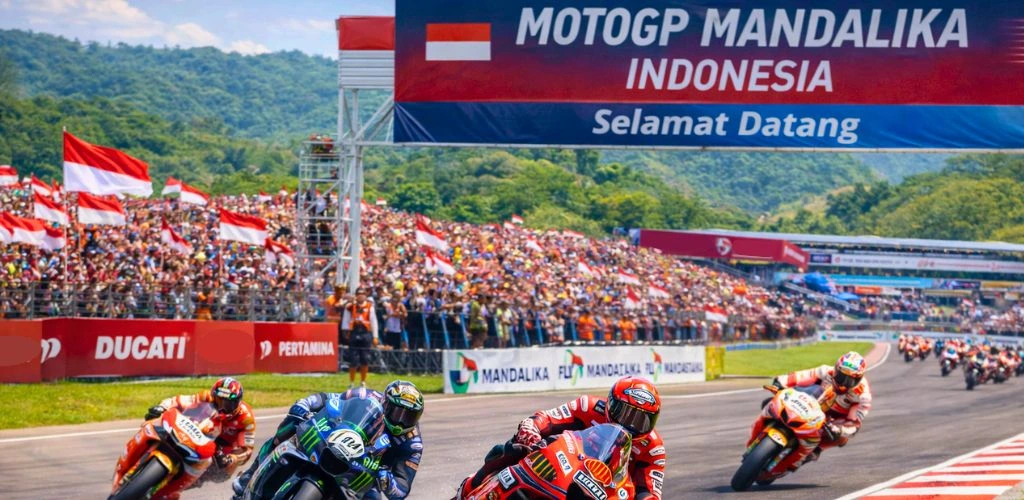
In 2022, MotoGP made its debut at Lombok’s Mandalika International Street Circuit. Tens of thousands of people from all around the world came to see the spectacle.
Mandalika is being courted by tourism officials in the hopes that it may attract significant racing events in the future. Large events like MotoGP tend to attract visitors who stay longer and spend more during their trip.
Not all sporting events in Indonesia come from modern international competitions. Some have very deep cultural roots.
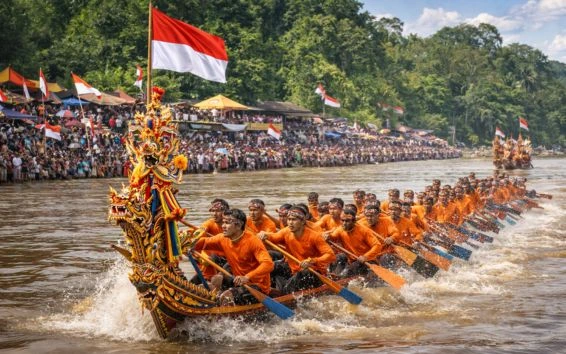
An example of an annual longboat race in Kuantan Singingi, Riau Province, is Pacu Jalur. This event has been going on for decades and derives from the harvest festivals on the Kuantan River. Thousands of people still flock from all over the world to see Pacu Jalur.
People cheer as long wooden boats with beautiful carvings speed down the river. Recently, travel businesses have been advertising Pacu Jalur as a cultural site in the area.
Travel companies have lately begun pushing Pacu Jalur as a cultural attraction in the region. People that go to the event get to see both sports and traditions at the same time.
Several factors are pushing the sector forward.
Indonesia’s Ministry of Tourism and Creative Economy has identified sports tourism as a priority sector. National programs now encourage destinations to host events that attract international participants.
Regional governments are also exploring sports competitions as a way to promote local tourism.
All around Indonesia, air travel is becoming better. International athletes and fans can go to places like Bali, Lombok, and Jakarta more easily now that there are more direct flights there.
When people decide whether or not to go to athletic events abroad, accessibility is a big factor.
People’s tastes for travel are changing.
A lot of people who travel today want to do things that include both exercise and exploration. Running a marathon in Bali or cycling through Sumatra offers something very different from a standard holiday.
For Indonesia, this shift creates an opportunity.
Sports events may last only a few days. However, their impact often stretches much longer.
International races and competitions introduce destinations to new audiences. A lot of people who go to witness sports events end up staying longer to spend quality time with family and friends.
At the same time, local towns earn attention and a boost to their economies. For Indonesia, sports events tourism is becoming another tool to diversify the tourism economy.
Marathons, bike races, surfing contests, and traditional festivals like Pacu Jalur are all great examples of how destinations can become known for something special.
Sports tourism in Indonesia is only starting to take off. New events appear each year across different regions. International organizers continue exploring Indonesian destinations for future competitions.
Natural landscapes, cultural heritage, and expanding infrastructure provide a strong foundation. For travelers seeking both adventure and competition, Indonesia offers something unusual.
A race here rarely takes place in an ordinary setting. Often, the finish line arrives with a view of rice terraces, ocean waves, ancient temples, or volcanic peaks.
That combination may become one of Indonesia’s strongest tourism advantages in the years ahead.
Major events include the Bali Marathon, Borobudur Marathon, and MotoGP at Mandalika Circuit. Surf competitions in Bali also draw global athletes. Traditional events like Pacu Jalur in Riau are starting to attract curious travelers as well.
Many runners want races that double as travel experiences. Indonesia offers scenic routes through villages, rice fields, and cultural landmarks. Because participants stay several days, marathon tourism often boosts local tourism spending.
Yes. Most events are happy to have people join in for fun. Athletes take part in bike tours and trail runs for the fun of it, not to be the best. Races like the Bali Marathon include numerous distance divisions.
Digital payments are now a normal part of doing business in Malaysia....
Hyundai Motor Malaysia is getting ready for a big year ahead. Hyundai...
A lot of workers are no longer just asking about their pay....
Tune Talk has made a brave move that could change the way...