
leadership development program
Leadership & ImpactRISE

Leadership Development Program: Vietnam’s Executive Growth Path

URL copied
Share URL copied

Leadership development programs change the way Vietnamese professionals view their professions and their companies. The PACE Leadership Development Program has its foundation on three key elements: self-leadership, team leadership, and organizational leadership, and trainers who have in-depth academic knowledge and profound experience in the field.
Moreover, the McCain Global Leaders Program Spring 2026 Legacy Experience will be conducted in Vietnam and will cover the journey and relationship between McCain and the Vietnamese people during this seven-day experience. The various programs reflect Vietnam’s increasing importance in leadership development.

Building Self-Leadership Foundations

Effective leadership starts with self-understanding and self-improvement. In addition, self-understanding in terms of one’s value system, strengths, and areas for self-improvement lays the foundation for effective leadership over others.
For instance, participants seek self-understanding in terms of their identity and decisions that have led to their present paths in life. In doing so, effective leaders develop self-understanding in relation to their roles within larger contexts.
Further, self-leadership philosophies assist in decision-making during critical moments in leadership. Unlike other leaders who make decisions in reaction to situations, effective leaders make decisions based on self-values.

Developing Team Leadership Skills

Management skills are different from individual contribution skills, and hence management training programs focus on communication skills, delegation, motivation, and conflict management.
In addition, adaptive leadership frameworks are important in adapting and thriving in challenging environments, and hence enhance the ability to catalyze meaningful change processes, as indicated in the research conducted by Statista.
Lastly, polarity management enables leaders to accept competing goals and hence effectively manage the tensions that exist between them, a situation that is likely to be experienced in a more interconnected environment where there are no simple solutions.

Organizational Leadership Perspectives

Senior leaders impact the entire organization through vision, strategy, and culture. As such, the development of leadership skills for leaders at this level focuses on systems thinking and change management.
In particular, leaders develop the ability to manage organizational change by engaging stakeholders in different departments of the organization. Moreover, leaders develop the ability to align people development strategies with business strategies.
In addition, the ability to develop inclusive systems to address complex social challenges is also crucial for leaders. Indeed, the Social Impact Leadership Program provides leaders with the necessary tools and frameworks to lead the organization effectively through uncertainty in addressing poverty and economic inequality in the world.

International Program Opportunities

Vietnamese professionals are able to access world-class developments through global partnerships. Firstly, the Vietnam Executive Leadership Program is a high-level policy forum co-organized by Harvard Kennedy School and Fulbright School of Public Policy and Management, where there are forums for high-ranking policymakers in the process of deliberating on major global socio-economic developments.
Secondly, the Obama Foundation Leaders Asia-Pacific program is a six-month virtual leadership development program that grounds emerging leaders in values-based frameworks to drive inclusive and lasting change.
Lastly, Northeastern University College of Professional Studies partners with International University in Ho Chi Minh City, where students are able to earn master’s degrees in leadership without leaving the city.

Sector-Specific Development

Various sectors need different forms of leadership. Therefore, specialized programs have been developed for the specific needs of social enterprises, non-profits, corporations, and the public sector.
For instance, educational sector leadership requires knowledge of pedagogy as well as organizational management. In the same way, the Teach For Viet Nam’s Leadership Development Fellowship includes intensive training in teaching, community development, and educational landscape for two months prior to Fellows’ commencement of teaching.
Technology industry leaders have different skills from manufacturing industry leaders. Therefore, in-house training programs are customized for specific organizational needs.

Mentorship and Coaching Components

Personal guidance enables the development of leaders much faster than group training can do. To be precise, one-on-one mentorship creates safe environments to discuss one’s challenges and opportunities.
In addition, executive coaching enables leaders to become aware of blind spots as well as to develop action plans to work on particular areas of development.
In addition, peer mentoring enables leaders to form communities where they can discuss experiences and challenges together. To be precise, one can learn as much as from peers as from experts.

Continuous Learning Mindsets

Professional development includes not only training programs but also learning behaviors. Therefore, leaders should encourage curiosity, ask for feedback, and even attempt new approaches.
In addition, reflective practices can also be useful in reinforcing learning from day-to-day activities. For example, journaling after a tough experience helps to learn more from the experience rather than just reacting to it.
However, to keep up with industry trends, management studies, and global happenings, leaders should also have proper information consumption behaviors. However, this should not lead to a lack of depth in understanding.

Measuring Development Impact

Assessing the effectiveness of the program also ensures that the investments are worthwhile. In particular, behavioral changes in the work situations are more significant than theoretical knowledge.
In addition, career progression after the completion of the program can also be monitored as an outcome of the program.
Moreover, feedback from the participants can also highlight the areas of the program that are working well and those that need improvement. Hence, the quality of the programs can be improved by adapting to the experiences of the participants as well as the business environment.

Future Directions

Vietnam’s leadership development landscape is continuing to mature in terms of both quantity and quality. Currently, increased demand for leadership development programs from both individuals and organizations is driving growth in workshops, customized programs, and degree programs.
Additionally, increased international partnerships ensure best practices are brought in while still being sensitive to local contexts. Technology is also allowing for a hybrid model of online conveniences and in-person connections.
Ultimately, an investment in leadership development is an investment in Vietnam’s future. As Vietnam continues to move forward in terms of economic development, the need for strong leadership in all fields is rising. Programs that foster self-awareness, team management, organizational thinking, and ongoing learning are producing leaders ready for tomorrow’s challenges today.
Learn more about leadership and professional development in Southeast Asia. Read stories of growth and development in Southeast Asia on Rise Asia.

FAQs

What makes an effective leadership development program?

An effective program combines research-based theory with practical experience like projects or simulations. It also includes reflection, peer learning, and ongoing support such as coaching or mentorship.

Short workshops may last a few days or weeks, while comprehensive programs often run 6–12 months. However, leadership development continues throughout a person’s career.

Research shows leadership skills can be developed through practice, training, and experience. Key abilities like communication, decision-making, and emotional intelligence are learnable.

Share URL copied
Related Articles

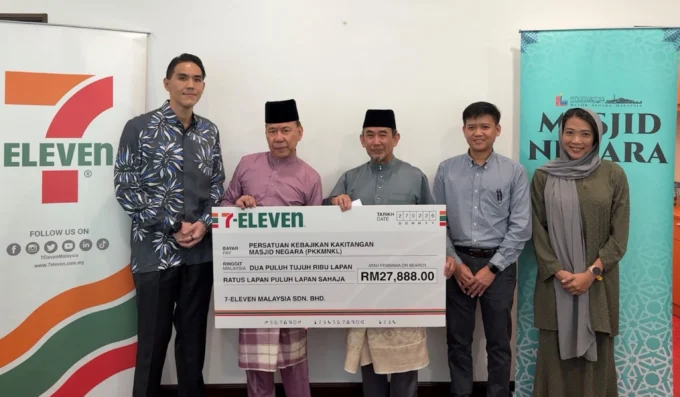
7-Eleven Malaysia Contributes RM27,888 to Masjid Negara in Support of Ramadan Moreh Programme

Kuala Lumpur, 27 February 2026 – In the spirit of Ramadan, 7-Eleven...

dobiQueen CSR Brings Relief to Families in Klang Valley

For many families and care homes in Malaysia, daily tasks like doing...

Pos Malaysia Kota Buku Collaboration Supports B40 Students

When a Pos Malaysia truck arrives at a school, most people expect...

Autism Awareness Walk 2026 Unites Communities in Subang

A short walk can say a lot. This April, Taarana is hosting...