


Metro Manila has been the clear focus of economic activity in the Philippines for decades. It is still the center of the country’s business, finance, and company headquarters. But there is a clear change happening.
The growth of regional economic hubs in the Philippines shows that investment, infrastructure, and business activity are slowly moving out from the capital region.
New businesses, property projects, and industrial zones are moving to Clark, Cebu, Davao, Iloilo, and new provincial corridors. Metro Manila is still in the lead, but regional cities are becoming more important in the country’s next stage of growth.
This change is part of a larger shift in how the Philippine economy is arranging itself across the country.
Why Regional Growth Is Picking Up Speed
Several long-term reasons are making the Philippines thrive outside of Metro Manila:
- Projects to modernize infrastructure
- Costs and traffic are going up in NCR.
- More ecozones and industrial parks
- Better digital connections
- Decentralization efforts by the government
Businesses have more options than only working in the capital as transportation networks grow and regional airports get better.
The change isn’t about getting rid of Metro Manila; it’s about adding more places for growth.
Clark Development Corridor: Growth of Industry and Aviation
The Clark development corridor in Central Luzon is now one of the best illustrations of how an area can change.
Clark gets the following benefits:
- Close to Metro Manila
- Expansion of New Clark International Airport
- Plans for rail connections
- Set up special economic zones
In Pampanga and surrounding regions, industrial parks and logistical facilities are still growing. More and more manufacturing companies, BPO offices, and warehouse owners see Clark as a cheaper option than Metro Manila.
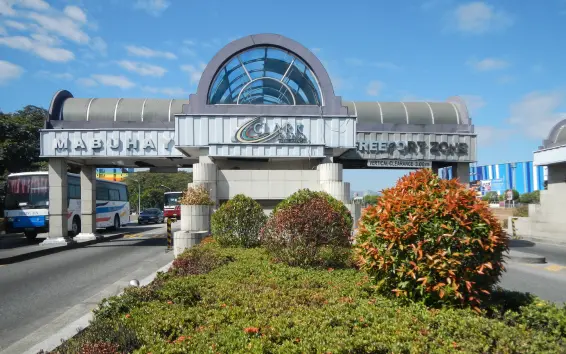
Improvements to infrastructure in this corridor could help firms that export goods and ease traffic in NCR.

Cebu’s economy is growing thanks to more services and real estate.
Cebu’s economy has grown in the Visayas region thanks to:
- Strong BPO presence
- Tourism is growing.
- Building commercial property
- Projects for retail and mixed use
Cebu City has been a commerce center for a long time, but in recent years, the demand for offices and homes has grown to suit a growing professional workforce.
Cebu’s importance as a key business hub connecting the Visayas and Mindanao markets is strengthened by better airport connections and modernized seaports.
Cebu’s established ecosystem makes it a good candidate for long-term regional leadership as decentralization becomes more important in policy.
Davao Investment Hub: Mindanao’s Growth Anchor
Davao’s prominence as an investment hub in Mindanao continues to grow further south.
Davao is appealing because:
- Strong trade in agriculture
- Adding more space to ports
- Real estate and retail developments are growing.
- Making it easier for infrastructure to link
Mindanao has a lot of resources and a rising market for consumers, which is good for the long run. Davao might become a more important hub for trade and business in the southern Philippines as transportation and logistics infrastructure gets better.
Empowering regions also makes it less likely that people will depend too much on one big city.
Changes in policy and practice for a decentralized Philippine economy
The idea of decentralizing the Philippine economy is not new. But the process of putting it into practice is speeding up.
Important things that make this possible are:
- Spending on infrastructure outside of NCR
- Setting up new government offices
- Incentives for businesses in the provinces to grow
- Adoption of remote and hybrid work
Digital change helps geographic diversification even more. Many service-based industries no longer need strict location centralization, which means that businesses can now run in less expensive regional cities.
This starts a virtuous cycle: more jobs lead to more people buying things in the area, which brings in more investment.
Infrastructure as the Base of Regional Hubs
Infrastructure is perhaps the most important factor in deciding whether regional centers can keep growing over the long term.
Some important parts are:
- Connecting roads and railroads
- Improvements to airport capacity
- How well a seaport works
- Dependability of power
- Expanding broadband
Large-scale infrastructure projects have started to fix problems that have been around for a long time. The long-term trend encourages economic growth in more than one city, even though progress is different in each location.
Decentralization plans could slow down if infrastructure isn’t aligned. With it, regional hubs can expand into fully competitive centers of growth.
Effects of Real Estate and Business Spillover
Real estate patterns also show the growth of regional economic hubs in the Philippines.
More and more developers are starting:
- Townships with different kinds of uses
- Parks for businesses
- Neighborhoods
- IT parks and office buildings
It is easier to build huge townships because land costs less than in Metro Manila.
But for real estate growth to be safe, it needs to go hand in hand with job growth and infrastructural planning.
Problems with balanced regional growth
Decentralization is moving in the right direction, yet it still has fundamental problems:
- Metro Manila still has the most talent concentration.
- Some parts of the country still don’t have high-speed digital infrastructure.
- Some provinces still have problems with logistics.
- The desire to invest may change based on world events.
The capital’s supremacy is deeply rooted, and regional centers need ongoing policy support and trust from the business sector.
It takes a long time for balanced growth to happen, not just a short time.
Why This Is Important for the Economy of the Philippines
Growing regional hubs has a lot of economic benefits:
- Less traffic in Metro Manila’s cities
- More jobs available to more people
- Better prices for land and property
- More competition in the region
- Stronger ecosystems for domestic consumption
A multi-polar economy can make a country more resilient, especially while the global economy is changing.
When growth happens in several places, the risk is spread out more evenly.
Outlook: Change that happens slowly but is important
The growth of regional economic hubs in the Philippines would probably continue slowly rather than quickly.
In the short term, Metro Manila will continue to be the key driver of the economy. But continued investment in infrastructure, the use of technology, and government incentives might slowly make secondary cities more important to GDP. Clark, Cebu, and Davao are already showing how aligning infrastructure and private investment can change the course of a region.
The bigger question is not if decentralization will happen, but how quickly and well it can grow.
Final Thoughts
The emergence of regional economic hubs signifies a significant transformation in the narrative of Philippine development. Metro Manila is still the most important city for business, but infrastructural expansion and investment decentralization are making peripheral cities more important strategically.
The change is still happening slowly, and there are still fundamental problems. The capital region still has an advantage because of its high concentration of talent, lack of infrastructure, and uneven distribution of capital.
But actively strengthening and investing in regional growth corridors is a strategic step forward.
It takes time to get a balanced economic geography. But Clark, Cebu, and Davao show that things can get better when infrastructure, policy, and private investment all work together.
For a country facing growing urbanization and long-term competitiveness issues, it may be necessary to look outside a particular metropolitan area in order to achieve long-term national growth.
Continue exploring Asia’s transformation at riseasia.com.
1. What are the main regional economic hubs in the Philippines?
Clark, Cebu, and Davao are among the most prominent emerging growth centers outside Metro Manila.
2. Why is decentralization important for the Philippine economy?
It reduces congestion, spreads employment opportunities, and strengthens regional competitiveness.
3. Can regional cities replace Metro Manila?
In the near term, Metro Manila remains dominant. However, regional hubs can complement and gradually diversify economic activity.