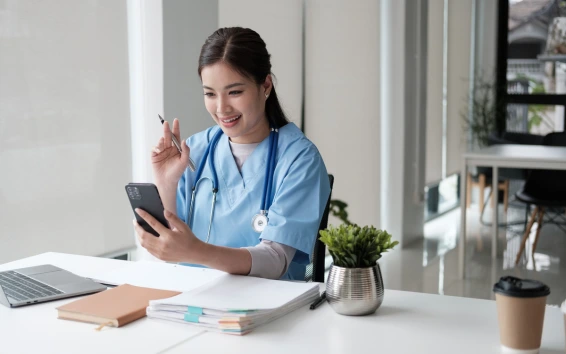


Telemedicine in Malaysia as gone far from being a mandatory during the pandemic to being a permanent part of digital healthcare delivery in the present days. For rural healthcare access and semi urban areas the way Malaysian get their medical care such as online healthcare consultations, e-prescriptions, and remote patient monitoring are changing with the existence on telemedicine.
Telehealth is becoming a bigger part of Malaysia’s digital economy strategy as more people use technology and regulators make rules more precise.
The increasing rise of platforms that offer online consultations in Malaysia has made Malaysian digital healthcare better over the past few years. Big health tech companies now let patients talk to licensed doctors through mobile apps. These apps let doctors and patients talk to each other on video, send prescriptions digitally, and deliver medicines.
According to industry estimates (latest figures to be fact-checked before publication), Malaysia’s telehealth market has recorded double-digit annual growth since 2020. During the pandemic, regulatory flexibility accelerated teleconsultation usage, and many of those behavioural shifts have remained.
Today:
Urban professionals use teleconsultations for primary care and follow-ups.
Parents increasingly seek online paediatric consultations.
Rural patients access specialist advice without long-distance travel.
Employers integrate telemedicine into corporate health benefits.
The Ministry of Health in Malaysia has also said that it is still interested in improving telehealth governance to make sure that digital healthcare services meet safety, privacy, and licensing standards.
It’s important to note that talks about updating the Telemedicine Act of 1997 started long before smartphones became common. This shows that the government wants to bring regulations up to date with the way things are now.
Telemedicine in Malaysia represents more than convenience. It addresses structural healthcare gaps.
In Malaysia, the geography makes it hard for people to get to healthcare services, especially in Sabah and Sarawak. People who live in rural areas often have to drive for hours to get to specialized facilities.
Digital healthcare Malaysia platforms help fill that gap by:
Telemedicine in Malaysia can’t take the place of emergency or complicated procedures, but it makes it much easier to get primary and follow-up care.
There are too many people in public clinics and hospitals in big cities like Kuala Lumpur and Penang. Malaysian online consultation platforms help keep non-urgent cases from going to physical facilities.
This lets public hospitals focus on complicated and urgent care while getting the most out of their healthcare resources.
Telehealth is at the crossroads of:
Health tech is a high-impact vertical that combines social value with business growth as Malaysia moves forward with its digital economy initiatives.
Malaysia’s health tech ecosystem has matured significantly. Venture funding into Southeast Asia’s digital health sector has expanded over recent years, with Malaysia positioning itself as a promising secondary hub after Singapore.
Local startups now compete in areas such as:
The competitive landscape is also attracting regional players, increasing service quality and innovation.
More and more big companies are adding telemedicine to their employees’ health care plans. This backs up:
Telehealth integration is becoming a common HR practice in fields like finance, technology, and manufacturing.
Yet, in Malaysia telehealth regulation still remains a big topic discussed in the industry.
Some of the areas that are being discussed about in the policy is:
Clear and modernized regulatory frameworks are essential to maintain patient trust and industry credibility.
It looks like policymakers are balancing innovation with patient safety instead of stopping the growth of digital healthcare, which is a good sign.
Public adoption is steadily rising, but behavioural shifts vary by demographic group.
Younger Malaysians are more comfortable with app-based consultations, especially for
Older people are slowly starting to use technology, often with the help of family members who help them get online.
Trust is still a big part of it. Patients are more likely to use telemedicine services that:
Hybrid healthcare models are becoming the most popular long-term structure. They combine digital consultations with physical clinics.
Telemedicine in Malaysia is anticipated to develop in three principal aspects.
In the future, private telehealth providers and public hospitals may work together more closely. This could make things better:
Digital integration into public systems would have a big effect on a large scale.
Telehealth is likely to get better with the help of artificial intelligence and wearable health monitoring devices.
Remote blood pressure tracking, glucose monitoring, and AI-assisted symptom analysis could improve the management of chronic diseases. This is especially important in Malaysia, where diabetes and hypertension are still common (statistics need to be checked).
It will be very important to update old telemedicine laws. A new framework could:
Malaysia could get more cross-border digital health partnerships within ASEAN if the rules are clearer.
Telemedicine is no longer just a short-term fix. It shows:
This change fits perfectly with Malaysia’s goals to improve the resilience of its healthcare system and boost the growth of its digital economy.
As more people use digital healthcare Malaysia and the rules change, it could become one of the country’s most socially important technology areas.
Yes, telemedicine services operate under existing healthcare regulations, though updates to the Telemedicine Act are under discussion to reflect modern digital practices.
It is effective for primary care, follow-ups, and minor conditions but does not replace emergency or complex in-person treatments.
It reduces travel time, lowers healthcare costs, and connects patients to specialists who may not be physically available in remote areas.
From health tech innovation to SME digital adoption and investment trends, Malaysia’s digital economy continues to evolve at pace.
If you want deeper analysis on digital healthcare, explore more expert coverage on RiseAsia.
Street food experiences in Asia touch new heights of excitement, and Vietnam...
By 2026, the Bangkok real estate market will no longer be defined...
Capital discipline, mixed-use integration, and the slow return of traffic patterns to...
Vietnam has registered remarkable progress in health gains over recent decades. Nevertheless,...