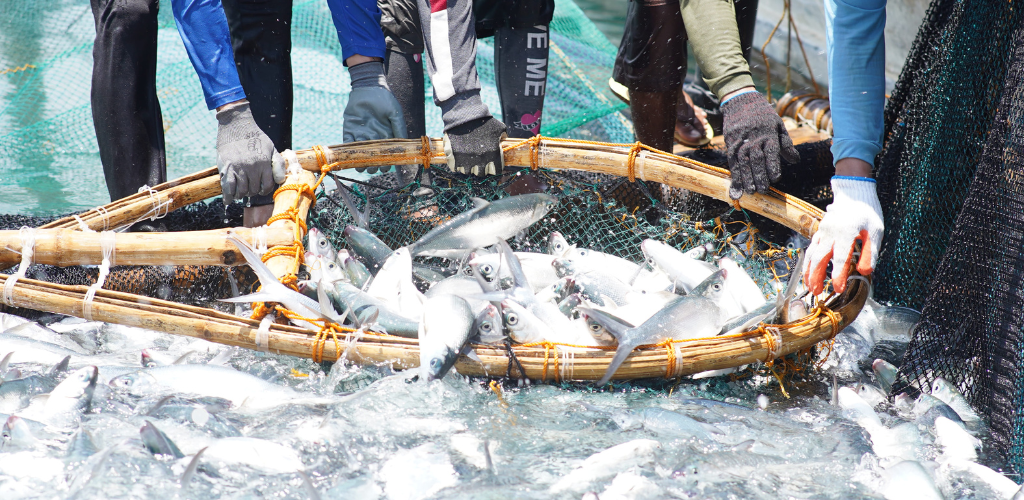
Asia continues to lead the world in aquaculture, producing the majority of the fish and seafood consumed globally. As demand for aquatic protein rises, the industry’s focus is shifting beyond increasing production to building stronger, more resilient farming systems that can withstand future challenges.
For companies across the sector, resilience now means adopting smarter farming practices, investing in research, and strengthening fish health before problems arise. Aboitiz Foods believes this proactive approach will play an important role in supporting Asia’s long-term food security.
Aquaculture has become one of the fastest-growing food production sectors worldwide. According to the Food and Agriculture Organization (FAO), global aquaculture production of aquatic animals exceeded 100 million tonnes for the first time in 2024.
Asia remains at the centre of this growth, accounting for more than 91% of global aquaculture production. The region supplies fish, shrimp and other aquatic products to millions of consumers while supporting livelihoods across farming communities.
As populations continue to grow and demand for sustainable protein increases, the industry faces increasing pressure to produce more food while protecting animal health and natural resources.
Traditionally, many aquaculture farms focused on treating diseases after outbreaks occurred. However, changing environmental conditions and increasingly complex farming systems have encouraged producers to rethink this approach.
Today, many operators are adopting Integrated Health Management, a preventive strategy that combines nutrition, water quality, biosecurity, farm management and animal health into one coordinated system.
According to Dr. Rajeev Jha, Aqua Farm Solution Lead at Aboitiz Foods, the industry has undergone a significant transformation over the past two decades.
He explained that disease prevention now begins long before pathogens appear, allowing producers to strengthen overall farm resilience while reducing biological and environmental risks.
This shift helps improve productivity, supports animal welfare and reduces the economic impact of disease outbreaks.

Scientific research has become an increasingly important part of modern aquaculture.
To better support farmers across Asia, Aboitiz Foods recently acquired an aquaculture research and development facility at the Singapore Food Agency’s Marine Aquaculture Centre on St. John’s Island.
The facility enables researchers to conduct controlled studies and validate new nutrition and farming solutions under real-world conditions.
These findings can then be translated into practical applications that help farmers improve feed efficiency, animal performance and long-term farm sustainability across different production environments.
As aquaculture evolves, farmers are looking for more than quality feed products. They increasingly require technical expertise, scientific guidance and integrated solutions that improve farm performance throughout the production cycle.
Operating across eight Asian markets, Aboitiz Foods has observed growing demand for solutions that combine nutrition, health management, environmental monitoring and farm efficiency.
According to Dr. Jha, the company continues to expand its role beyond supplying feed.
Instead, it aims to become a long-term aquaculture solutions partner by helping customers improve productivity, profitability and sustainability through science-based innovations.
The future of aquaculture will depend on collaboration between producers, researchers, nutrition specialists and technology providers.
These industry priorities will be highlighted during The Aquaculture Roundtable Series 2026, taking place in Bali, Indonesia, where industry leaders will discuss how innovation can strengthen aquaculture across the region.
On 20 August, Dr. Rajeev Jha will share insights into how preventive health management is helping reshape modern aquaculture and supporting more resilient production systems.
The event reflects a broader industry commitment to developing practical solutions that balance food production with sustainability.
Aquaculture plays a critical role in feeding Asia’s growing population. However, long-term success will depend on the industry’s ability to adapt to evolving environmental, biological and market challenges.
Preventive health management, research-driven innovation and stronger collaboration are becoming essential tools for achieving this goal. Together, these approaches can help producers reduce risks, improve operational efficiency and strengthen food supply chains across the region.
As the sector continues to evolve, investments in science, technology and knowledge-sharing are expected to play an increasingly important role in ensuring aquaculture remains a reliable source of sustainable nutrition for future generations.
Innovation in agriculture and aquaculture is becoming increasingly important as Asia works to strengthen food security while meeting rising demand for sustainable protein. From research-driven farming practices to collaborative industry partnerships, new approaches are helping producers build more resilient food systems for the future.
At RiseAsia, we continue to highlight the people, businesses and innovations driving sustainable growth across the region.
Asia produces more than 90% of the world’s aquaculture output, making it essential for regional food security, employment and sustainable protein production.
It is a preventive approach that combines nutrition, biosecurity, water quality, animal health and farm management to reduce disease risks before outbreaks occur.
The company is investing in aquaculture research, technical expertise and science-based farm solutions to help producers improve productivity, profitability and long-term sustainability across Asia.