Malaysia is positioning palm oil as a strategic industrial growth driver as the country deepens economic and trade cooperation with China through higher-value and sustainability-focused industries.
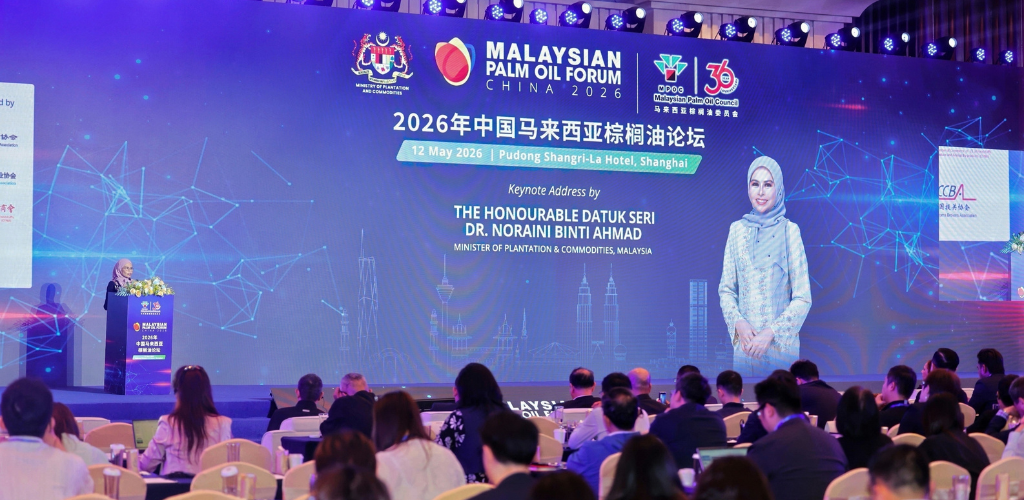
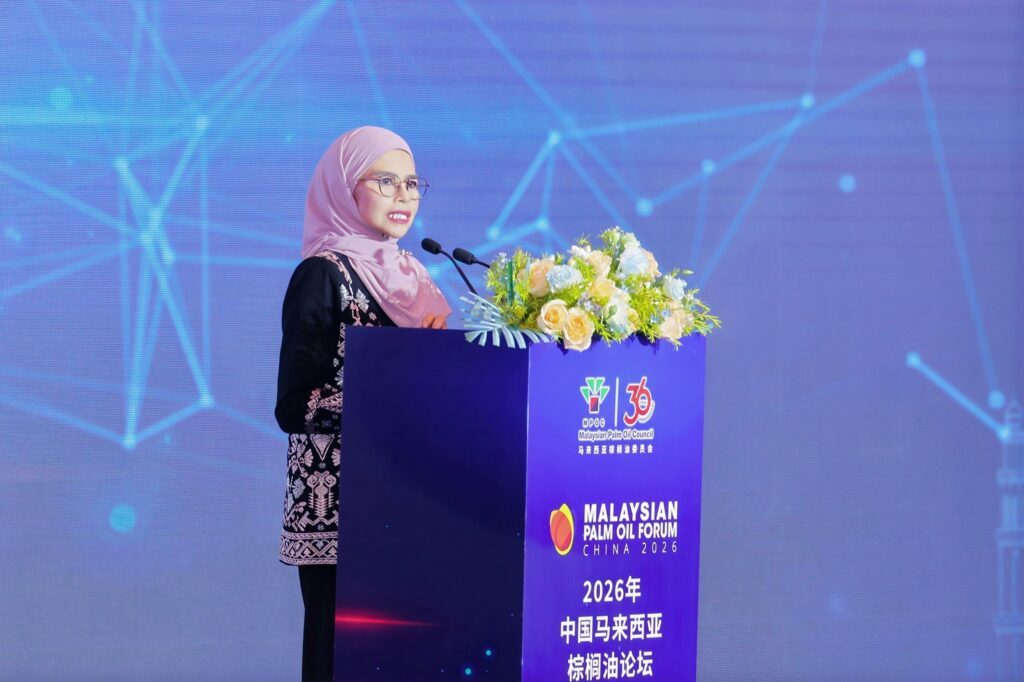
The direction was reinforced during the Malaysian Palm Oil Forum (MPOF) China 2026 in Shanghai, hosted by the Malaysian Palm Oil Council (MPOC). Led by Plantation and Commodities Minister Datuk Seri Dr Noraini Ahmad, the forum brought together industry players, investors, manufacturers, and trade groups from both countries.
The event highlighted how Malaysian palm oil is increasingly moving beyond traditional commodity trade into sectors linked to industrial innovation, specialised manufacturing, and green growth.
Malaysia’s palm oil industry has long been associated with food production and exports. However, the sector is now evolving toward higher-value industrial applications and downstream manufacturing.
Speaking during the forum, Dr Noraini Ahmad said palm oil is increasingly being recognised as a strategic industrial input supporting innovation, sustainable manufacturing, and long-term economic development.
Today, palm oil is widely used across sectors including food manufacturing, oleochemicals, personal care, specialty ingredients, home care products, and other emerging industrial applications.
The shift reflects broader efforts by Malaysia to strengthen value-added production instead of relying heavily on raw commodity exports alone.
China continues to be one of Malaysia’s most important export destinations for palm oil and palm-based products.
In 2025, Malaysia exported approximately 2.64 million tonnes of palm oil products to China, generating export earnings valued at around RM10.9 billion.
Industry observers note that China’s oils and fats market is also changing rapidly, with stronger demand for specialised, performance-driven, and sustainability-focused products.
This transition creates new opportunities for Malaysian companies involved in downstream processing, industrial manufacturing, and premium palm-based product development.
As both countries strengthen economic cooperation, palm oil is expected to remain an important part of broader Malaysia-China trade relations.

Sustainability was another major focus during MPOF China 2026 as international markets continue placing stronger emphasis on traceability and responsible sourcing.
Dr Noraini reaffirmed Malaysia’s commitment toward sustainable production practices through the Malaysian Sustainable Palm Oil (MSPO) certification scheme, which has been mandatory across the national supply chain since 2020.
For Malaysia, sustainability is becoming increasingly important not only for environmental credibility but also for maintaining long-term competitiveness in global export markets.
The industry has faced growing international scrutiny in recent years, particularly around environmental concerns and supply chain transparency. In response, producers and policymakers are placing greater focus on certified sustainable production standards.
The forum also reflects wider efforts to strengthen industrial partnerships between Malaysia and China beyond direct trade alone.
MPOC noted that engagement efforts have expanded in recent years through buyer visits, manufacturing exposure programmes, and direct collaboration across the palm oil value chain.
In late 2025, MPOC hosted 37 major Chinese buyers in Malaysia to provide direct exposure to plantations, refineries, downstream manufacturing facilities, and sustainability practices.
These initiatives aim to strengthen long-term confidence in Malaysia’s palm oil ecosystem while encouraging investment and deeper industrial collaboration between both countries.
Malaysia’s palm oil sector remains one of the country’s most important economic contributors, supporting exports, employment, manufacturing activity, and rural development.
As global demand evolves, the industry is increasingly shifting toward innovation, sustainability, and higher-value industrial applications instead of traditional commodity-focused growth alone.
For Malaysia, stronger cooperation with China could help accelerate this transition while supporting wider goals around industrial upgrading, resilient supply chains, and sustainable economic development.
The next phase of growth may depend less on volume and more on how successfully the industry adapts to changing international expectations and emerging manufacturing opportunities.
Trade, sustainability, and industrial transformation continue shaping economic growth across Asia as countries strengthen partnerships around manufacturing, technology, and resource development.
For more updates on regional trade trends, industry transformation, and Malaysia-China economic cooperation, visit RiseAsia and explore our latest coverage on Asia’s evolving business and investment landscape.
The forum focused on strengthening Malaysia-China cooperation in palm oil, sustainability, and higher-value industrial applications.
China is one of Malaysia’s largest export markets for palm oil and palm-based products.
MSPO stands for Malaysian Sustainable Palm Oil, a mandatory certification system focused on sustainable production and responsible sourcing.