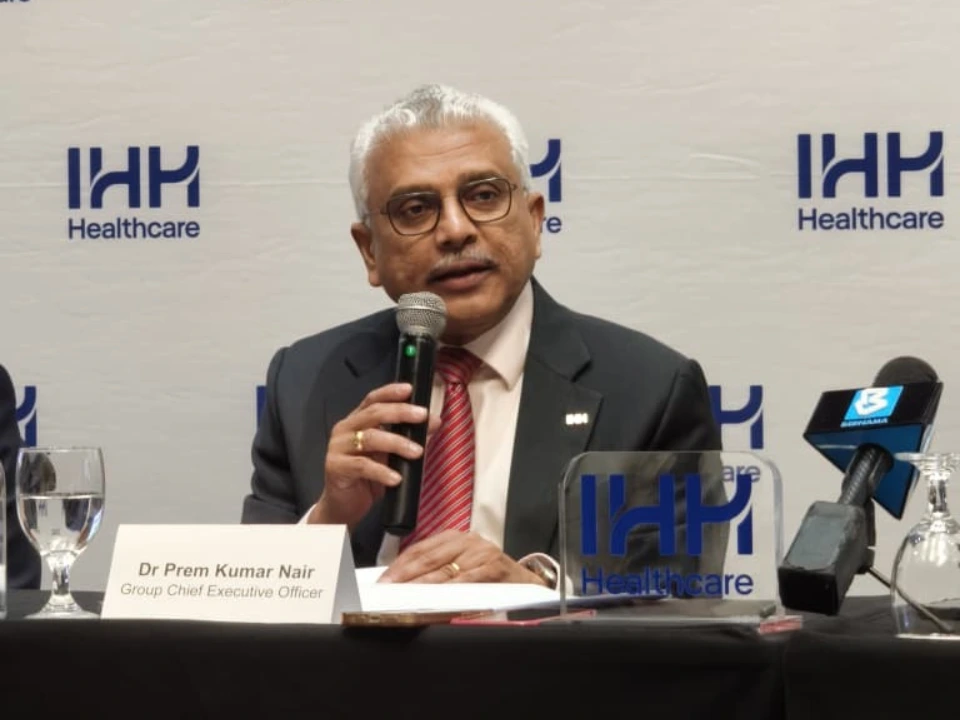
IHH Healthcare is accelerating its long-term transformation plans as healthcare demand continues rising across Asia. The group reported strong FY2025 performance while expanding digital systems, sustainability initiatives, and clinical capabilities across its regional network.
The healthcare provider also reaffirmed its target to achieve double-digit return on equity (ROE) by 2028 as it continues investing in operational efficiency, patient experience, and technology-driven healthcare delivery.
During its 16th Annual General Meeting held in Kuala Lumpur and via live streaming, shareholders approved all resolutions tabled by the group, including director re-elections and renewal of its share buy-back authority.
For FY2025, IHH recorded core revenue growth of 18% year-on-year, reaching RM26.2 billion. EBITDA rose 14% to RM5.8 billion, while profit after tax and minority interests excluding exceptional items increased to RM2.3 billion.
The group also announced a higher total ordinary dividend of 10.5 sen per share, reflecting confidence in its financial position and long-term strategy.
IHH said demand for quality healthcare services remains strong despite global economic uncertainty. Factors such as ageing populations, workforce pressure, and rising healthcare costs are continuing to reshape healthcare systems across the region.
Malaysia’s growing medical tourism sector is also expected to contribute to future expansion. Industry forecasts indicate medical tourism demand in Malaysia could continue growing between 15% and 20%, strengthening the country’s role as a regional healthcare hub.
The group’s hospitals in Malaysia and India were among the strongest contributors to FY2025 performance.
One of the biggest focuses for IHH is technology adoption across its operations. The healthcare provider is implementing cloud-based treasury systems with embedded AI tools to improve forecasting, cash management, and operational planning.
At the same time, IHH is consolidating enterprise systems across finance, procurement, and human resources into a single integrated platform.
The rollout will begin progressively across Malaysia, Singapore, and Hong Kong from late 2026 as the group aims to improve workforce insights, supply chain resilience, and operational efficiency.

IHH is also introducing more AI-powered healthcare support systems across its hospitals.
In Singapore, the group has already implemented an AI-powered nurse rostering system to help reduce administrative workload and improve workforce management. The company believes technology and data-driven systems will play a bigger role in improving patient care and operational productivity over the coming years.
The group continues focusing on clinical leadership, workforce development, and patient experience as part of its wider transformation roadmap.
Alongside business growth, IHH also launched its new 2030 sustainability roadmap. The plan includes targets to reduce emissions, improve supplier engagement, and strengthen water and waste management practices across its healthcare network.
The group achieved 14 out of 16 sustainability targets set for 2025, showing steady progress in balancing healthcare expansion with environmental and social responsibility.
With operations across 10 countries and 89 hospitals globally, IHH remains one of Asia’s largest private healthcare providers.
As healthcare systems evolve across Asia, large healthcare groups are increasingly investing in digital infrastructure, sustainability, and value-based care models to meet changing patient needs.
The continued growth of medical tourism, AI adoption, and integrated healthcare services also highlights how healthcare is becoming a major driver of regional economic development and innovation.
For more stories on healthcare innovation and Asia’s evolving industries, visit RiseAsia.
IHH Healthcare recorded RM26.2 billion in core revenue for FY2025.
The group aims to achieve double-digit return on equity by 2028.
IHH is introducing AI-powered systems, cloud-based treasury platforms, and integrated enterprise management systems across its regional operations.